Hejazi Arabic for Visitors: Useful Words and Phrases for Your Trip to Jeddah
One of the nicest things you can do in Jeddah is say to a shopkeeper in Al-Balad, “Ya’teek al-‘afiya, bikam da?” — and watch his face light up. The Hejazi dialect spoken in Jeddah is light and friendly, shaped over centuries by everyone who passed through the city, pilgrims and traders alike. Most Arabs understand it easily, yet it has words and expressions of its own that may surprise you. In this guide I’ve gathered the most useful words and phrases you’ll hear and need as a visitor — whether you’re an Arabic speaker from another region or a non-Arabic speaker keen to learn a few words.
Why Hejazi Is Special
For centuries the Hejaz received millions of pilgrims from across the Muslim world, and some settled here. Words from Turkish, Persian, Urdu, Malay and other languages entered the dialect and melted into it. That’s why Jeddawis use words you may not hear elsewhere in Saudi Arabia.
Notable features include the “th” sound often becoming “t” or “s,” and “dh” becoming “d” or “z” — so you’ll hear “da” for “dha” (this) and “talata” for “thalatha” (three). The dialect also has a quick rhythm and a warm tone.
Jeddah’s Flavour of Hejazi
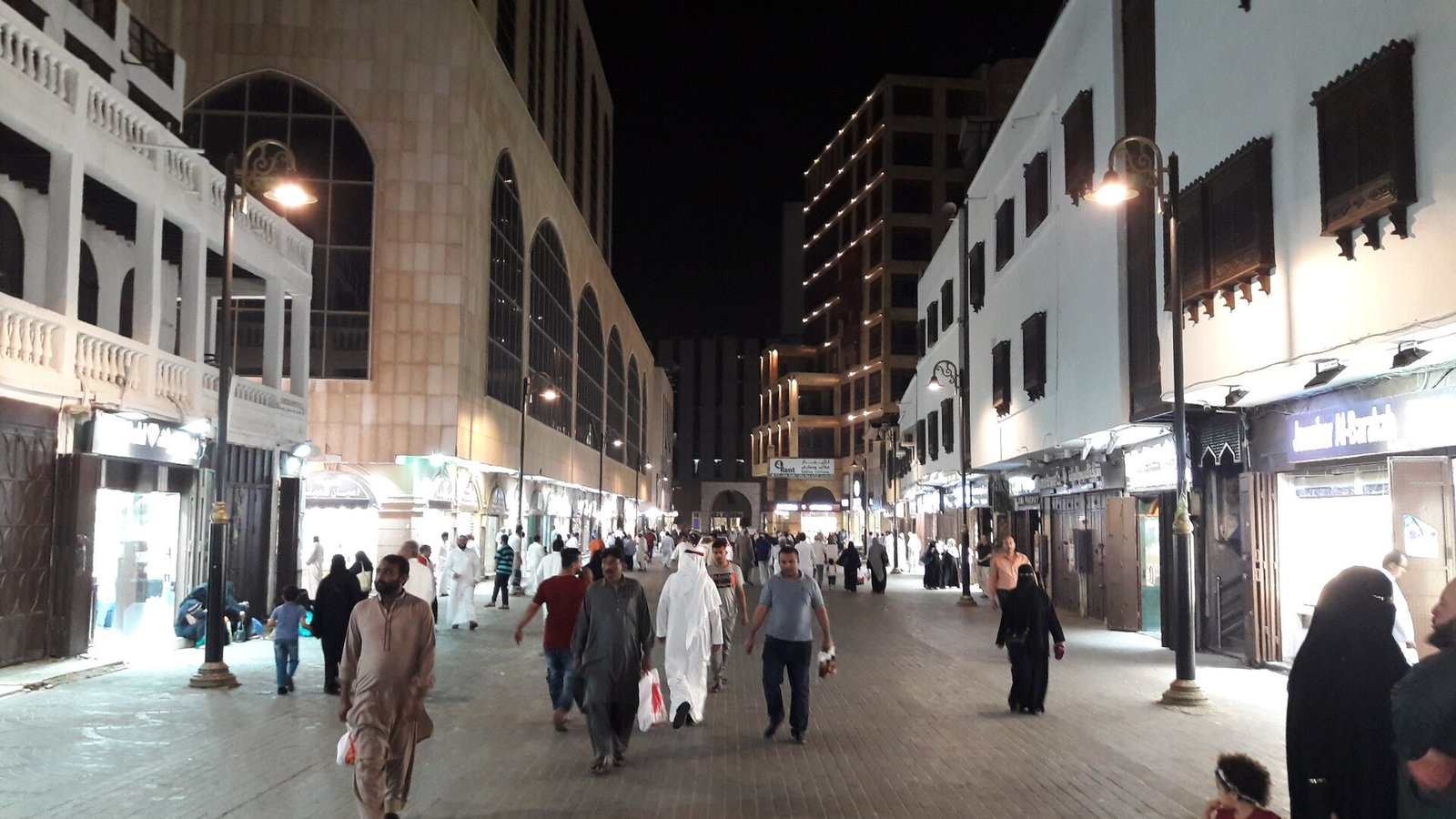
Hejazi isn’t one uniform dialect; there are differences between Jeddah, Makkah, Madinah and Taif, and between city and Bedouin speech in the region. Jeddah’s version is the speech of a coastal trading city: fast, light and open, with words from the sea, the souq and the port. You’ll notice young Jeddawis mixing Hejazi and English, especially in cafés and modern spaces — a reflection of a city open to the world since long ago.
If you speak another Arabic dialect, don’t worry: Jeddawis are used to hearing every dialect from pilgrims, Umrah visitors and residents, and will understand you easily — often switching to your dialect out of politeness.
Greetings and Courtesies
- As-salamu alaykum: the basic greeting everywhere; reply “Wa alaykum as-salam.”
- Ahlein / Ya hala: a friendly welcome you’ll hear a lot.
- Kaifak? / Esh akhbarak?: How are you? Reply “Alhamdulillah, tamam” or “Bikhair, Allah yisallimak.”
- Ya’teek al-‘afiya: literally “May God give you strength” — a thank-you and appreciation for someone working; say it to a shopkeeper, worker or driver. Reply: “Allah yi’afeek.”
- Allah yisallimak: reply to a compliment or kind wish.
- Tislam / Tislami: thank you (to a man / woman), literally “may your hands be safe.”
- Mashkoor / Shukran: thanks.
- Al-‘afw / Wala yhimmak: you’re welcome.
- Ma’a as-salama / Fi aman Allah: goodbye.
- Hayyak Allah: welcome, said to a guest.
- Nawwartana: “you’ve lit up our place,” said to a guest on arrival or departure; reply “Munawwar bi-ahlu.”
Everyday Essentials
- Aywa: yes.
- La: no.
- Esh?: what? e.g. “Esh tibgha?” — what do you want?
- Fein?: where? e.g. “Fein al-Balad?”
- Mata?: when?
- Leish?: why?
- Kam? / Bikam?: how many? / how much?
- Dahheen: now — one of the most famous Hejazi words.
- Ba’dein: later.
- Abgha: I want, e.g. “Abgha gahwa” — I want coffee.
- Ma abgha: I don’t want.
- Kida: like this, e.g. “Sawwiha kida” — do it like this.
- Marra: very, e.g. “Helw marra” — very nice. (It doesn’t mean “once” here!)
- Zay: like, as in “zay kida.”
- Haqq / haqqi: mine, belonging to, e.g. “Ash-shanta haqqati” — my bag.
- Da / di: this (masc. / fem.).
- Khalas: done, finished, enough — a multipurpose word.
- Tayyib: okay.
- Yalla: let’s go.
- Ma’lesh: sorry, never mind, excuse me — a magic word for smoothing awkward moments.
At the Souq
- Bikam da?: how much is this?
- Ghali: expensive. “Ghali shwayya” (a bit pricey) opens a friendly haggle.
- Rakhees: cheap.
- Akhir si’r?: what’s your best price?
- Nazzil shwayya: bring it down a little.
- ‘Indak…?: do you have…? e.g. “‘Indak ‘oud?”
- Abgha ashoof: I’d like to see.
- Bas: only, or enough.
- Al-hisab: the bill / amount due.
- Adfa’ bish-shabaka: I’ll pay by card. “Shabaka” is the Saudi word for the card terminal.
- Cash: cash.
For more on Al-Balad’s markets and how to shop there, read my Historic Jeddah souqs guide.
A Sample Dialogue in Al-Balad
To see how these words fit together, here’s a simple exchange you might have with a perfume seller in Souq Al-Alawi:
- You: As-salamu alaykum.
- Seller: Wa alaykum as-salam, ya hala, hayyak Allah. Esh tibgha? (What would you like?)
- You: Abgha ‘oud, ‘indak? (I’d like oud — do you have any?)
- Seller: Aywa, ‘indana anwa’ kiteer. Tibgha tijarrib? (Yes, we have many kinds. Want to try?)
- You: Aywa, law samaht. Bikam da? (Yes please. How much is this?)
- Seller: Da bi-miya w khamseen. (That’s 150.)
- You: Ghali shwayya. Akhir si’r? (A bit pricey. Best price?)
- Seller: ‘Ashanak, bi-miya w ‘ishreen. (For you, 120.)
- You: Tayyib, khalas. Adfa’ bish-shabaka? (Okay, deal. Can I pay by card?)
- Seller: Akeed, tafaddal. (Of course, go ahead.)
- You: Ya’teek al-‘afiya.
- Seller: Allah yi’afeek, nawwartana.
Notice “‘ashanak” — “for your sake” — and “nawwartana,” one of the lovely welcome phrases you’ll hear often at farewells.
Numbers, Hejazi Style
- Wahid, itnein, talata, arba’a, khamsa: 1–5 — note “th” becoming “t” in “itnein” and “talata.”
- Sitta, sab’a, tamanya, tis’a, ‘ashara: 6–10.
- ‘Ishreen, talateen, arba’een, khamseen: 20, 30, 40, 50.
- Miya: 100; “miteen” is 200.
- Alf: 1,000.
- Nuss: half, e.g. “nuss kilo.”
- Rub’: quarter, e.g. “rub’ sa’a” — a quarter of an hour.
At Restaurants and Cafés
- Al-menu law samaht: the menu, please.
- Esh tinsahni?: what do you recommend?
- Safari: takeaway.
- Mahalli: eating in.
- Bidoon shatta: no chilli.
- Har shwayya: a bit spicy.
- Moya: water.
- Barid / har: cold / hot.
- Al-hisab law samaht: the bill, please.
- Lazeez marra: very delicious — the cook will be delighted.
Food Names You’ll Hear
- Foul w tamees: the classic Jeddah breakfast of fava beans with large tandoor bread.
- Mutabbaq: thin dough filled with meat and egg, cooked on a griddle.
- Ma’soub: mashed bread with banana and honey or ghee.
- Saleeg: creamy rice cooked in broth and milk.
- Sayadiyah: rice with fish and caramelised onion.
- Balila: hot boiled chickpeas with cumin.
- Sobia: a cold Ramadan drink.
- Dibyaza: Eid sweet of apricot paste and nuts.
Getting Around
- Waddeeni: take me to, e.g. “Waddeeni al-Balad.”
- Nazzilni hina: drop me here.
- Yameen / yasar: right / left.
- Sida: straight ahead — a common Hejazi word.
- Gareeb / ba’eed: near / far.
- Zahma: traffic jam.
- Ishara: traffic light.
- Dawwar: roundabout.
Lovely Social Expressions
- ‘Ala rasi: “on my head” — with pleasure; your request is an honour.
- Abshir: consider it done — one of the nicest words you’ll hear.
- Inshallah: God willing, used for future intentions.
- Mashallah: an expression of admiration when seeing something beautiful.
- Allah yihayyeek: reply to a welcome.
- Ta’al itgahwa: come have coffee with us — an invitation.
- Ya sheikh!: surprise or disbelief, depending on tone.
- Wallah?: really?
Words That Can Cause Confusion
- “Marra”: in the Hejaz means “very,” while elsewhere it may mean “woman” or “once.”
- “‘Afiya”: in some North African dialects can mean fire, but in the Hejaz it means health and strength — “ya’teek al-‘afiya” is a kind wish.
- “Za’lan”: upset or annoyed with someone, not just generally sad.
- “Tamam”: okay, fine — used constantly.
- “‘Adi”: no problem, it’s fine — more than just “normal.”
Words With a Story
- Barha: a small square between houses in a quarter.
- Markaz: the outdoor gathering spot of a quarter’s men.
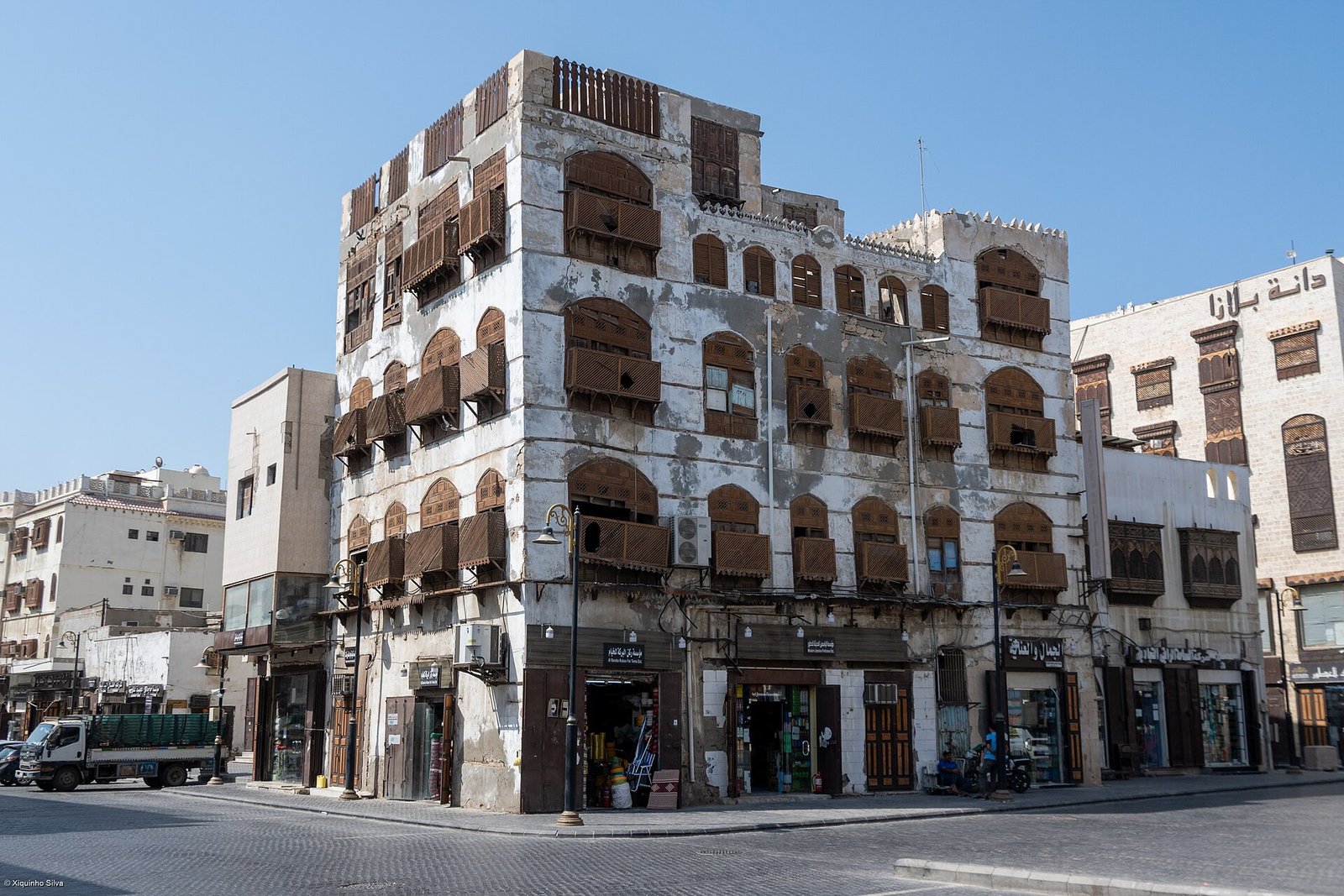
- Roshan: the projecting wooden window of old houses.
- Dakka: a bench or raised seat.
- Zeer: a large clay jar for storing and cooling water.
- Kandasa: a name tied to desalinated water in Jeddah’s memory, after the old distillation machine.
To learn these words in context, read my guide to Jeddah’s old quarters.
Tips for Communicating Confidently
- Don’t fear mistakes: Jeddawis appreciate any attempt at their dialect, however imperfect.
- Start with a greeting: “As-salamu alaykum” before any question changes how people receive you.
- Use “ya’teek al-‘afiya”: a small phrase that makes a big difference with workers.
- English is available: in hotels, restaurants and malls you’ll find English speakers.
- Pointing works: at the souq and restaurant, pointing plus “da” and “bikam” is usually enough.
- Ask for meanings: hear a strange word? Ask “Esh ya’ni?” — you’ll get an explanation with a smile.
Learn the Dialect on Tour
On my tours I love teaching guests Hejazi words in their real context: haggling words in the souq, food names at the stalls, house words in the quarters. By the end of the day, guests are usually saying “ya’teek al-‘afiya” to everyone they meet! For this experience, the Historic Jeddah tour is ideal, and on the full Jeddah city tour we keep learning by the sea.
FAQ
Do Jeddawis understand Modern Standard Arabic?
Yes — everyone understands it, and you can speak it or your own dialect without problems.
What does “dahheen” mean?
“Now” — one of the most famous Hejazi words.
What does “marra” mean in Hejazi?
“Very,” as in “helw marra” — very nice.
Do people speak English in Jeddah?
Yes — English is widespread in hotels, restaurants, the airport and malls, and many young people speak it.
What does “adfa’ bish-shabaka” mean?
“I’ll pay by card” — “shabaka” is the common Saudi name for the card terminal.
What’s the most important phrase to learn?
“Ya’teek al-‘afiya” — a phrase of thanks and appreciation that opens hearts everywhere.
The Takeaway
Hejazi Arabic isn’t just a way of speaking; it mirrors Jeddah’s history of openness to the world. With a few simple words like “dahheen,” “abgha,” “marra” and “ya’teek al-‘afiya,” you’ll go from a visitor who watches to a guest who connects, and you’ll find people closer to you than you expect. Learn a few before your trip, try them at the first souq you visit, and let the smiles do the rest. And if you forget everything in this article, remember just two phrases: “As-salamu alaykum” at the start and “ya’teek al-‘afiya” at the end — Jeddawis’ warmth and generosity will take care of everything in between.
Learn Jeddah in Its Own Language
I’m Adel Alsulami, a licensed tour guide in Jeddah with more than eight years of experience. Join me on a tour where you learn the dialect and the stories in their real setting.
📞 Call & WhatsApp: +966 50 444 6088 (WhatsApp)
✉️ Email: Adel@iAdelAlsulami.com
👉 Book your tour now
Planning a visit? Meet Adel Alsulami, your licensed Jeddah tour guide and discuss a private itinerary around your interests.