Photogenic Landmarks in Jeddah: Choose Your Subject Before Your Route
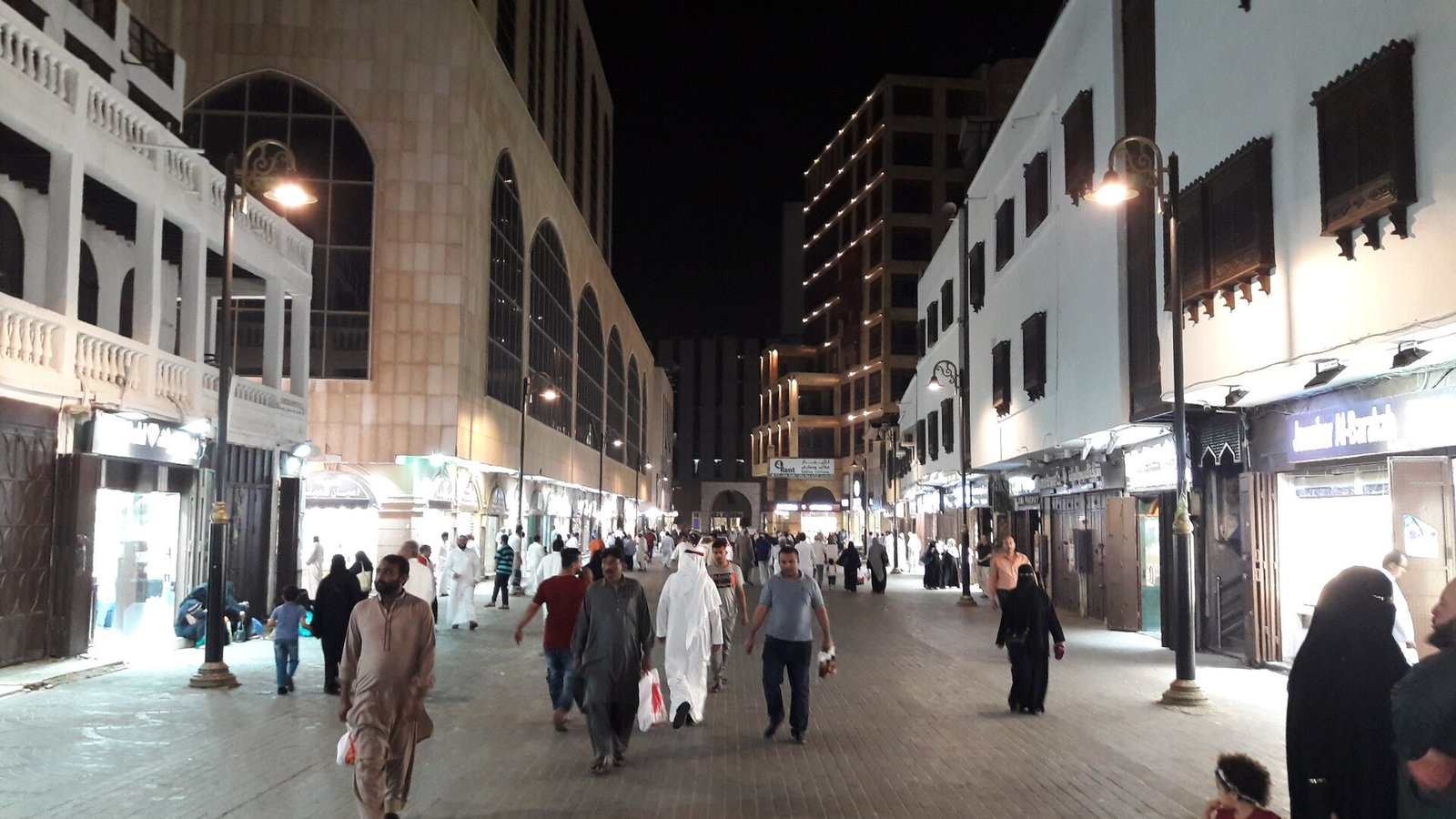
Choosing photo spots in Jeddah becomes easier when you start with a subject: heritage architecture, a coastal landmark, carved woodwork or a night scene. More stops do not automatically produce a better collection. One façade can give you time to notice light and lines that a hurried journey between distant landmarks might miss.
This guide helps you choose landmarks, while the site’s photography-walk article addresses organising the outing. The photographs here are dated archive examples with documented reuse rights, not promises that every angle will be accessible or that the same light will return on your visit. Respect site instructions and people’s privacy, and distinguish exterior viewing from entry and interior photography.
Choose the photographs you want to bring home
- Woodwork and details: Al-Balad’s rawasheen, doors and façades.
- A recognisable heritage building: Nassif House, with a wide scene and a closer detail.
- Night architecture: Al-Matbouli House’s exterior from an accessible public route, depending on actual lighting.
- Water and a landmark: King Fahd’s Fountain when operating.
- Architecture on the coast: Al-Rahma Mosque from a permitted exterior viewpoint.
- Horizon and light: a specific section of Jeddah’s Corniche or waterfront.
1. Al-Balad’s rawasheen: photographs that notice detail
UNESCO describes Historic Jeddah through its Red Sea architectural tradition, including masonry construction and woodwork decorating the façades. Rawasheen therefore provide a useful subject for visitors interested in details and the relationship between a building and its street. Look beyond a single colour: notice the projection of the wood, repeated openings and shadows that give the scene depth.
Start with a picture placing the house in its surroundings, then isolate a detail without touching it or entering private space. Watch straight lines and leave room around your subject rather than cutting edges off unintentionally. With a phone, one step sideways may help more than digital zoom. The Jeddah rawasheen guide explains how to read the architecture before photographing it.
Check the route that is actually open. Restoration work and barriers can change the view, so a façade photographed in an earlier year may not be exposed in the same way. If people appear in the scene, wait for them to pass or seek agreement when an identifiable person becomes the main subject.
2. Nassif House: one building, several visual stories
Visit Saudi lists Nassif House among Historic Jeddah’s landmarks. You can make its façade the main subject, then select details that complement the wider picture: a door, a row of windows or the building’s relationship with the surrounding space. This approach creates a connected set instead of repeating a similar image from every angle.
Do not make entry essential to your visit before confirming access. Exterior viewing differs from going inside, where arrangements and photography instructions may apply. Start with the Nassif House guide and decide whether you want an exterior photograph or an indoor cultural visit confirmed in advance.
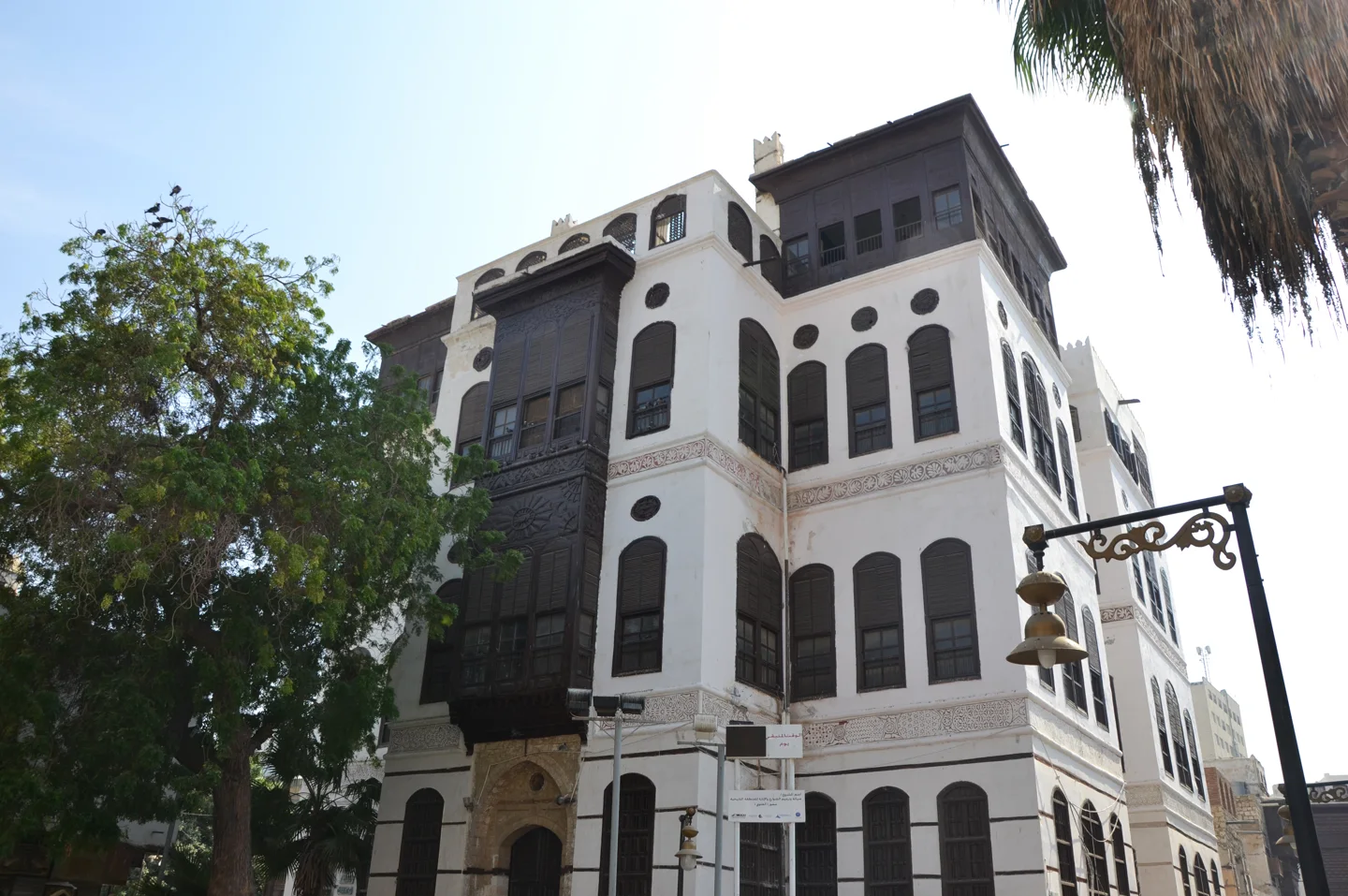
3. Al-Matbouli House: the façade and changing night light
The house’s official website identifies Al-Matbouli as a heritage house on Zuqaq Al-Qamsani in Al-Balad, highlighting its stone construction and wooden rawasheen. If night architecture interests you, compare an exterior stop here according to access and the actual lighting on your visit. An old photograph does not establish that every light or viewpoint will be unchanged.
In low light, hold your phone steadily and take several attempts, then check whether the details are sharp. Bright lamps can turn into white patches and unbalance the photograph. For an indoor visit, confirm booking arrangements and instructions for photography, flash and equipment with the operator. The Al-Balad at night guide helps plan a suitable stop without assuming that every building opens in the evening.
4. King Fahd’s Fountain: water within the composition
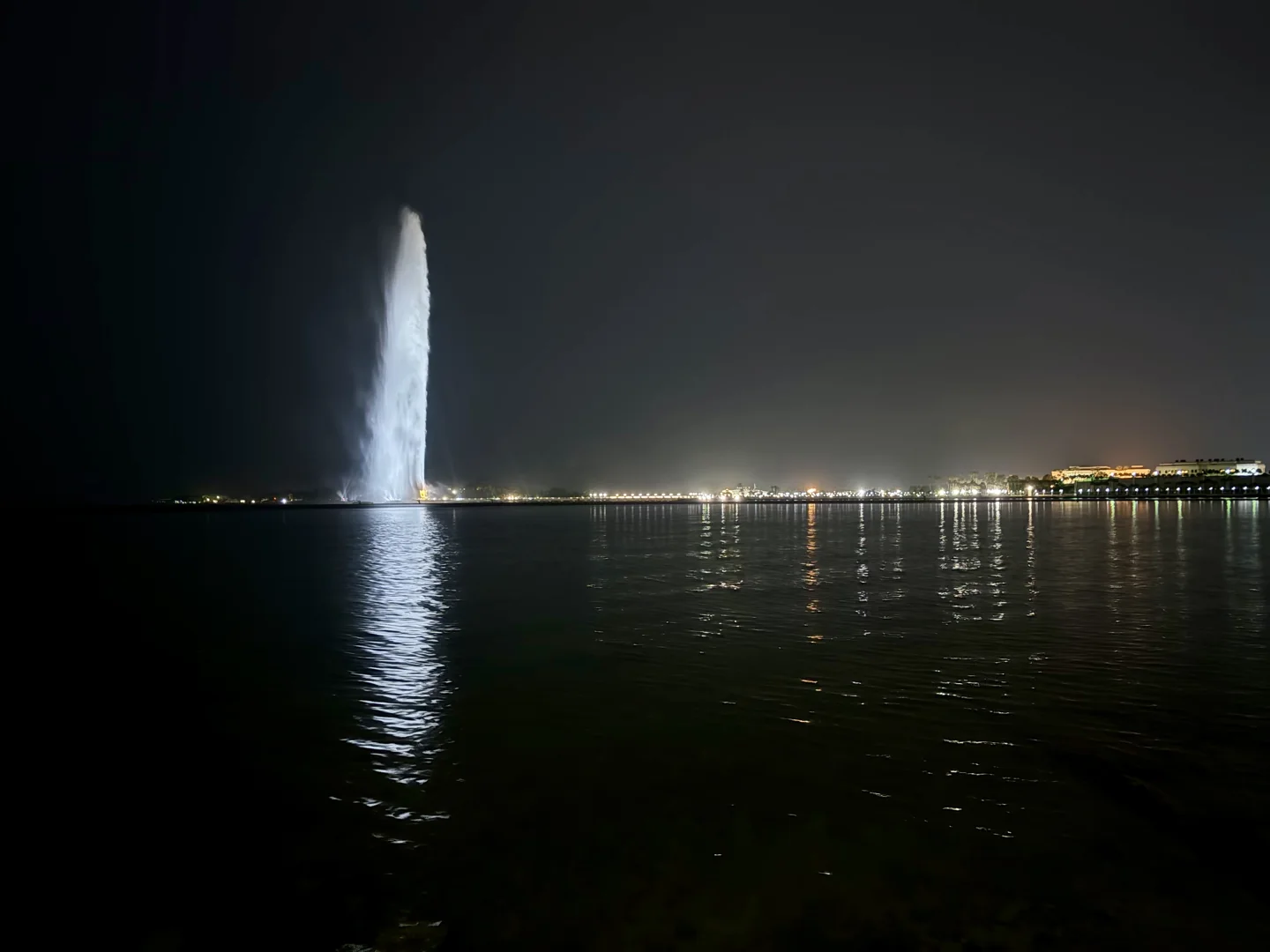
The fountain is a different photographic subject from Al-Balad’s façades. The scene changes with operation, wind and light. Choose a viewing point on the public Corniche and allow space around the water jet. You do not need to fill the frame with the fountain: a simple foreground may suggest scale, provided you do not block the walkway or put anyone at risk.
Keep the stop worthwhile as a coastal outing if the fountain is not operating. Do not establish a timetable from an old post or promise a specific photograph before arrival. The King Fahd’s Fountain guide explains viewing points and planning considerations.
5. Al-Rahma Mosque: architecture and its relationship with water
Visit Saudi identifies Al-Rahma as Jeddah’s Floating Mosque. Focus on the exterior scene and the building’s relationship with the sea while respecting its purpose as a place of worship. Choose a permitted standing area, keep entrances and worshippers’ routes clear, and do not make people your photographic subject without their agreement.
Entry and interior photography need separate confirmation. Other visitors being present does not establish permission for every type of equipment or photography. The Al-Rahma Mosque guide explains what to check before an architectural visit. With limited time, do not add the mosque to an Al-Balad route without calculating the transfer between areas.
6. The waterfront: a subject shaped by light
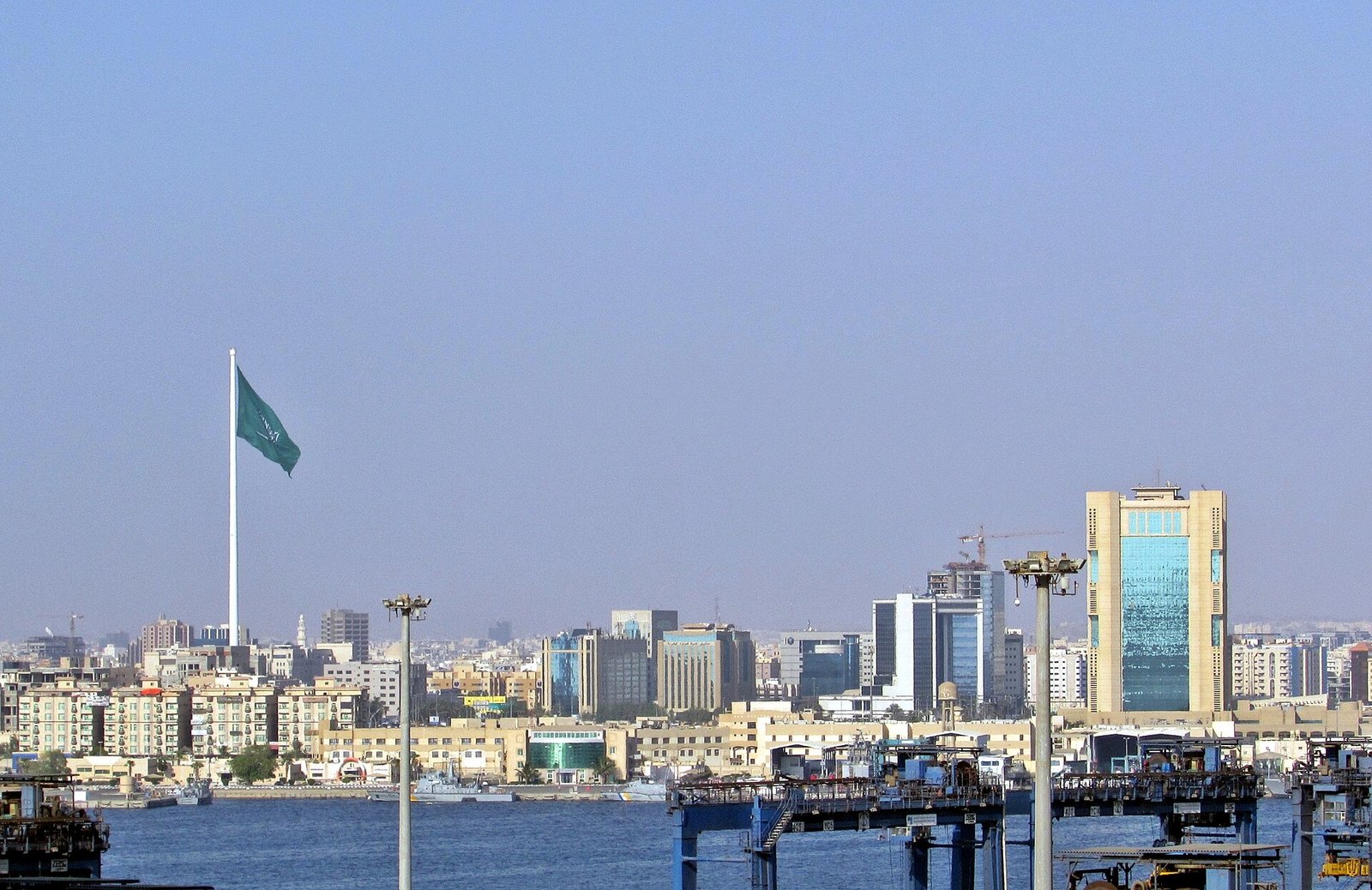
The horizon can be the subject without a famous building. Choose a specific waterfront or Corniche section and look for a foreground such as the promenade’s line or reflected light on water. Keep the horizon level, take a wide scene and then try a simpler composition. An unsafe edge is not necessary for a good viewpoint.
If sunset is your goal, check its time for your date and the weather, and allow an arrival margin. Do not assume that the sky will repeat the colours of a previous photograph. Compare the sunset spots guide and Red Sea views guide to select an area matching your subject.
How to choose just two subjects
Select subjects that complement each other: a heritage façade and a wooden detail within Al-Balad, or a sea horizon and a coastal landmark within your selected area. Pictures do not need to come from geographically different places to look different. Calculate transfers before combining Al-Balad, the northern waterfront and Al-Hamra; there is no fixed journey time suitable for every day.
Give each stop three intended pictures: an identifying wide view, a detail and a photograph explaining the landmark’s relationship with its surroundings. This is a planning tool, not a compulsory artistic rule. If access changes, shorten the stop and work with what is available rather than attempting to pass barriers.
Frequently asked questions
Do I need a professional camera?
A phone can photograph general scenes and details. Light, composition and stability matter more than buying equipment before deciding what pictures you want.
Does every landmark allow interior photography?
No. Check each site’s instructions, including flash, tripods and commercial photography.
Do these photographs show the exact current situation?
They are dated archive photographs. Lighting, access, restoration and operation can change, so review conditions for your visit.
Sources and featured-image credit
UNESCO — Historic Jeddah, Visit Saudi — Nassif House, Al-Matbouli House’s official website and Visit Saudi — Al-Rahma Mosque. Sources reviewed on 14 October 2026. Photography suggestions are editorial recommendations, not permits or guarantees of access.
Featured image: Al-Balad architecture, Francisco Anzola, 3 February 2022, Wikimedia Commons, CC BY 2.0. Resized and converted to WebP.
Want to choose landmarks that match your photographic interests? Discuss your itinerary with Adel Alsulami and agree on timing, subjects and inclusions before booking.
Book the full Jeddah tour with Adel Alsulami — 5–8 hours, SAR 1,000 · Contact Adel to book or ask a question
Cover: Vadym Gavrykov / Wikimedia Commons, CC BY-SA 4.0.
Planning a visit? Meet Adel Alsulami, your licensed Jeddah tour guide and discuss a private itinerary around your interests.