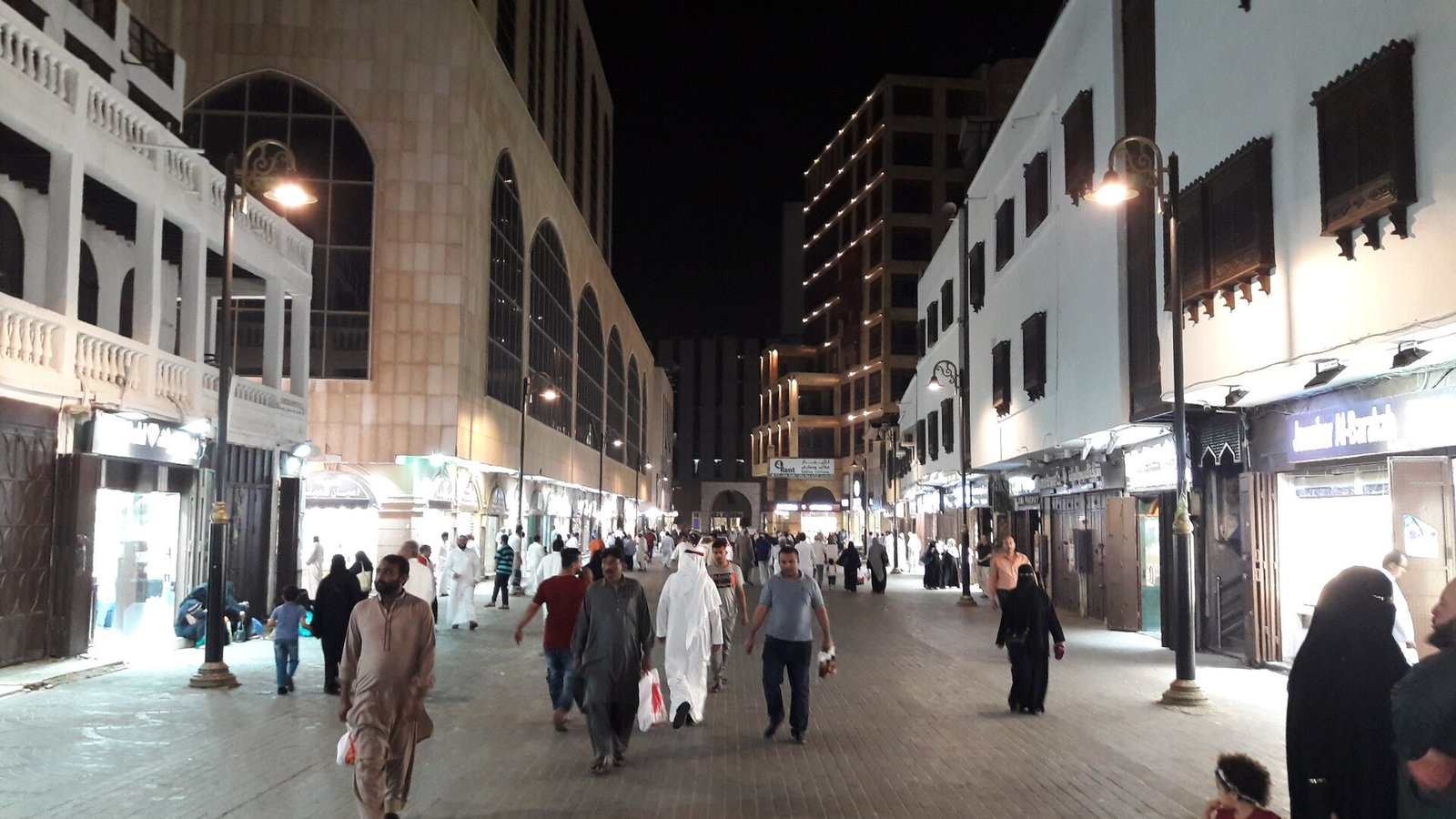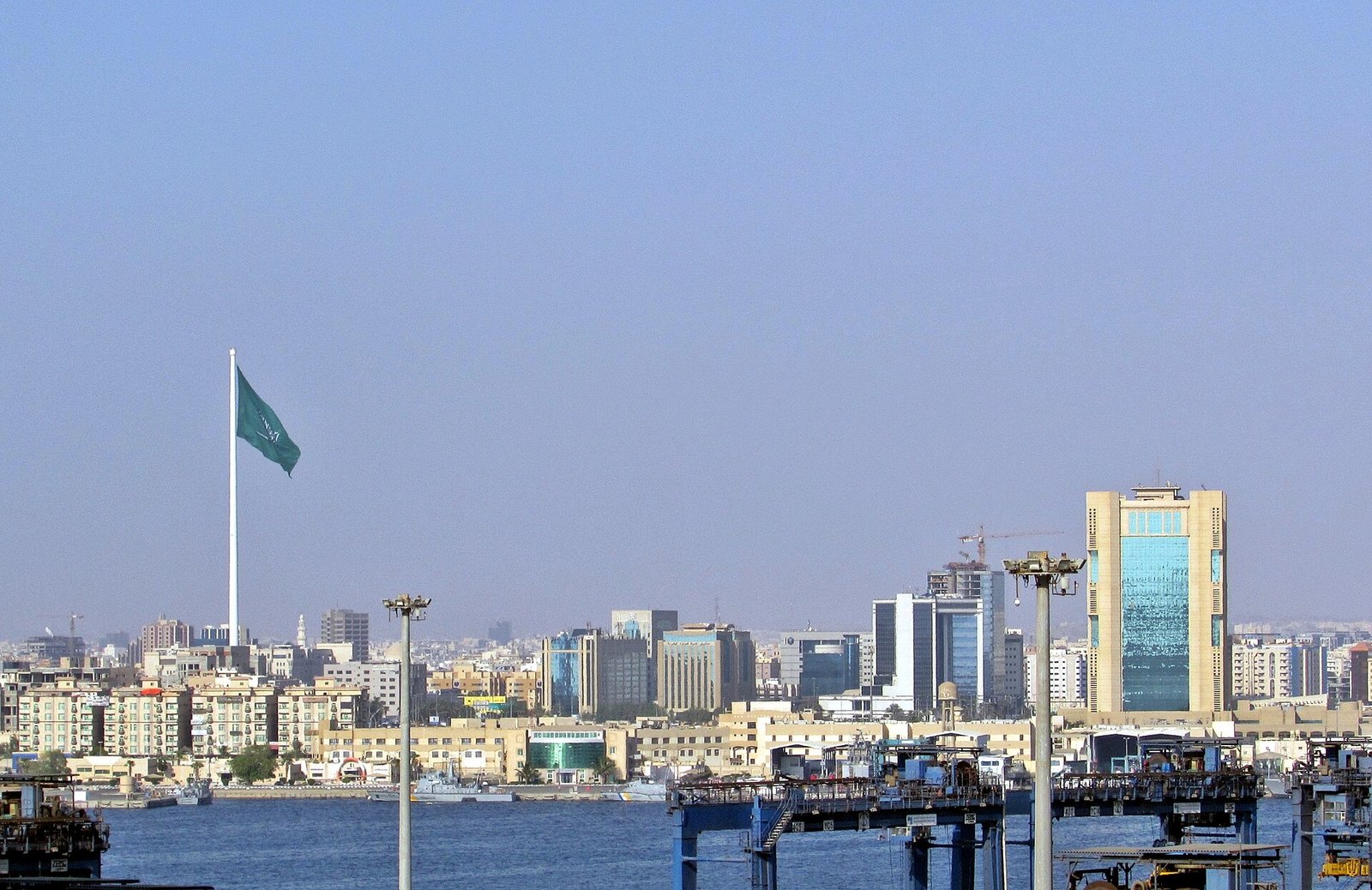
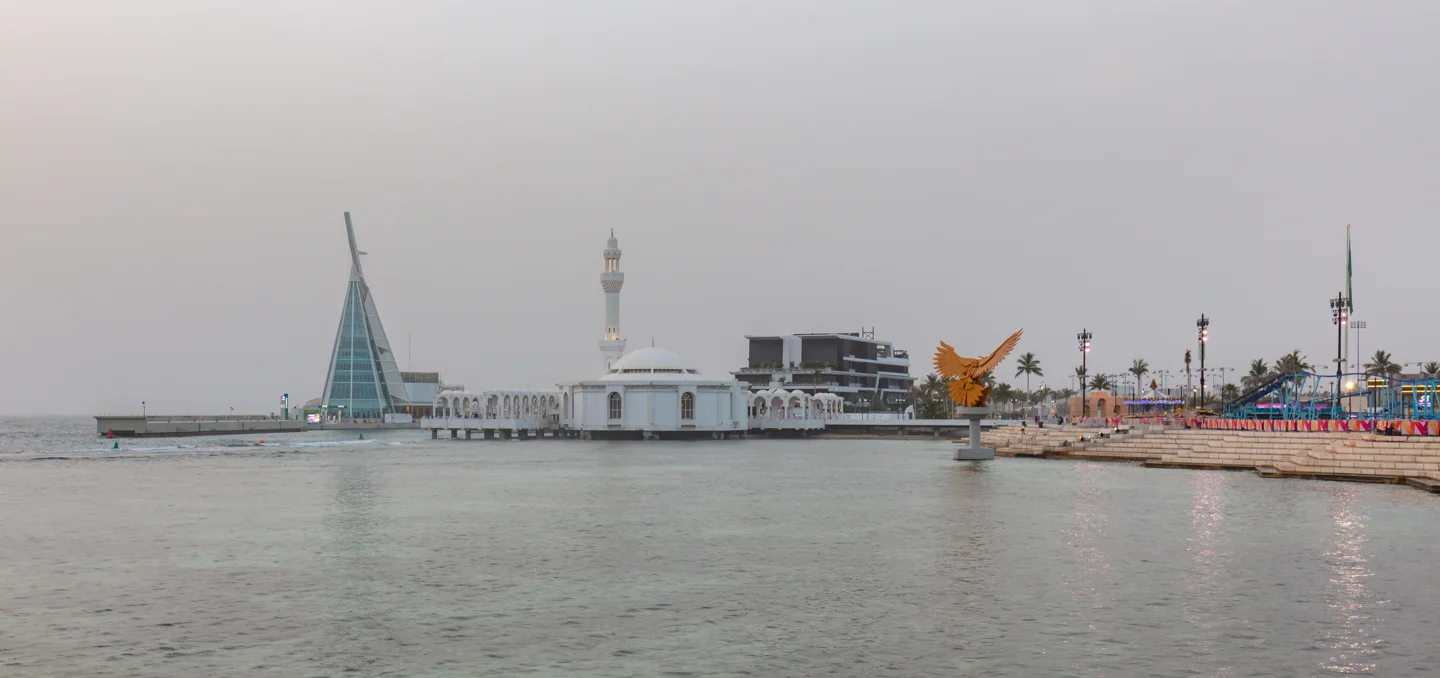
Featured photo: Diego Delso, delso.photo, CC BY-SA 4.0, 19 May 2025. Resized and converted to WebP; derivative under the same licence.
Visiting Al-Rahma Mosque in Jeddah: Plan a Respectful Stop
Al-Rahma Mosque combines a coastal setting with the role of a working place of worship. A rewarding visit begins by deciding whether you want to observe its exterior, learn about its architecture or request an interior visit where permitted. Those are different arrangements. A photograph in a visitor guide or a tour booking does not automatically provide entry.
This guide explains the mosque’s background, details worth observing and practical planning for a respectful stop. Keep its precise location separate from a King Fahd Fountain visit in Al-Hamra. Both are coastal landmarks, but they should not be treated as neighbouring stops without allowing for transport.
Al-Rahma and the name “Floating Mosque”
Visit Saudi lists Al-Rahma as Jeddah’s Floating Mosque. Saudipedia places it on the Red Sea coast in Al-Shati’ and records construction in 1985. It was initially called Masjid Al-Sayyidah Fatimah before taking its present name. Use “Al-Rahma Mosque, Jeddah” and a map pin when arranging arrival, since the name Al-Rahma also belongs to mosques in other cities.
The sea setting is central to how visitors recognise it. Observe the relationship between the building, water and connection to land rather than treating the nickname as a technical description. A permitted coastal viewpoint can explain that relationship without making access to the prayer hall essential to the stop.
What to observe in the architecture
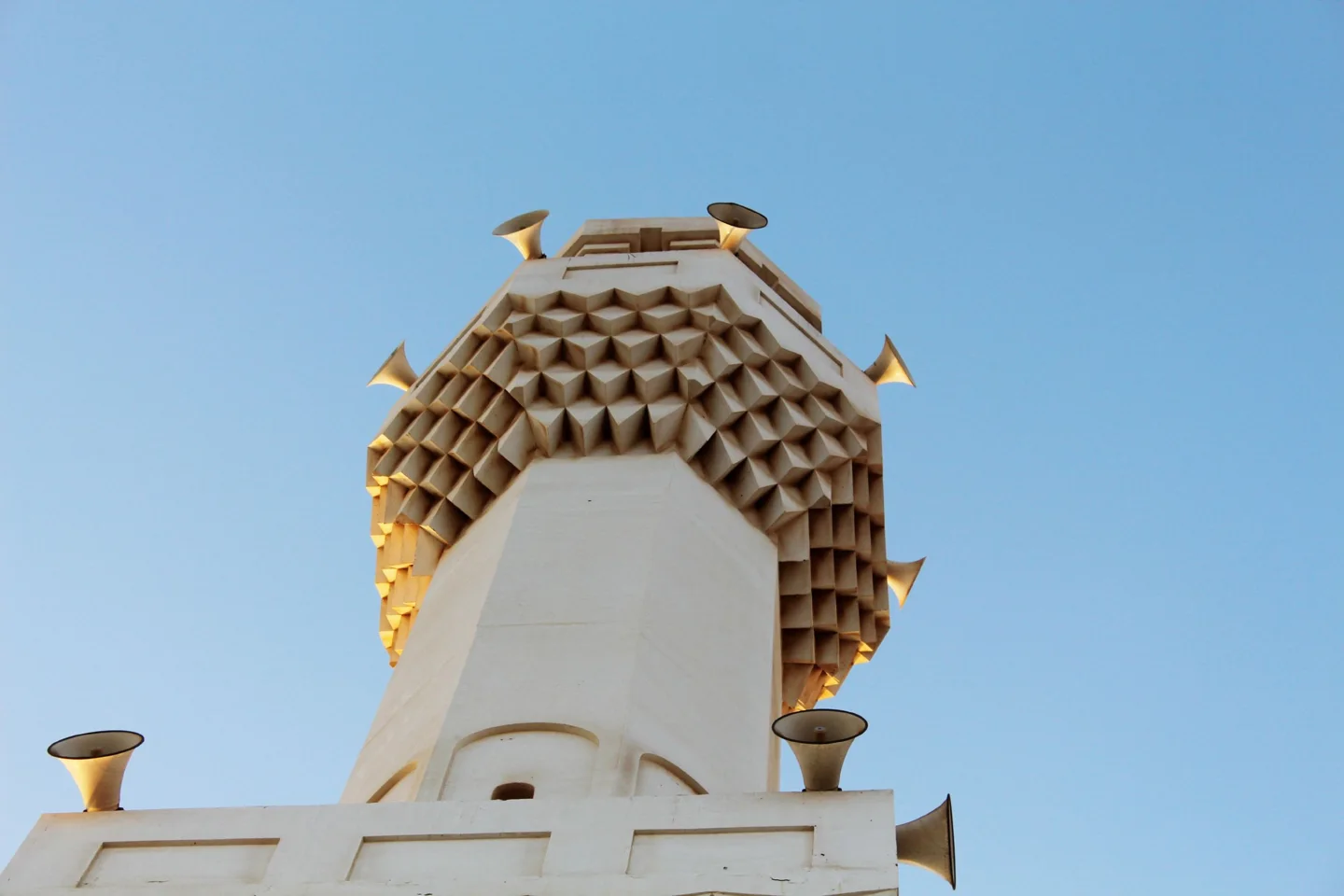
Start with the outline of the main dome and minaret, the repeated arches and the contrast between the building and the sea. Visit Saudi describes its pale blue dome and white marble exterior. Light, distance and the angle you choose can alter how colours and details appear, so compare a wider view with a closer permitted position.
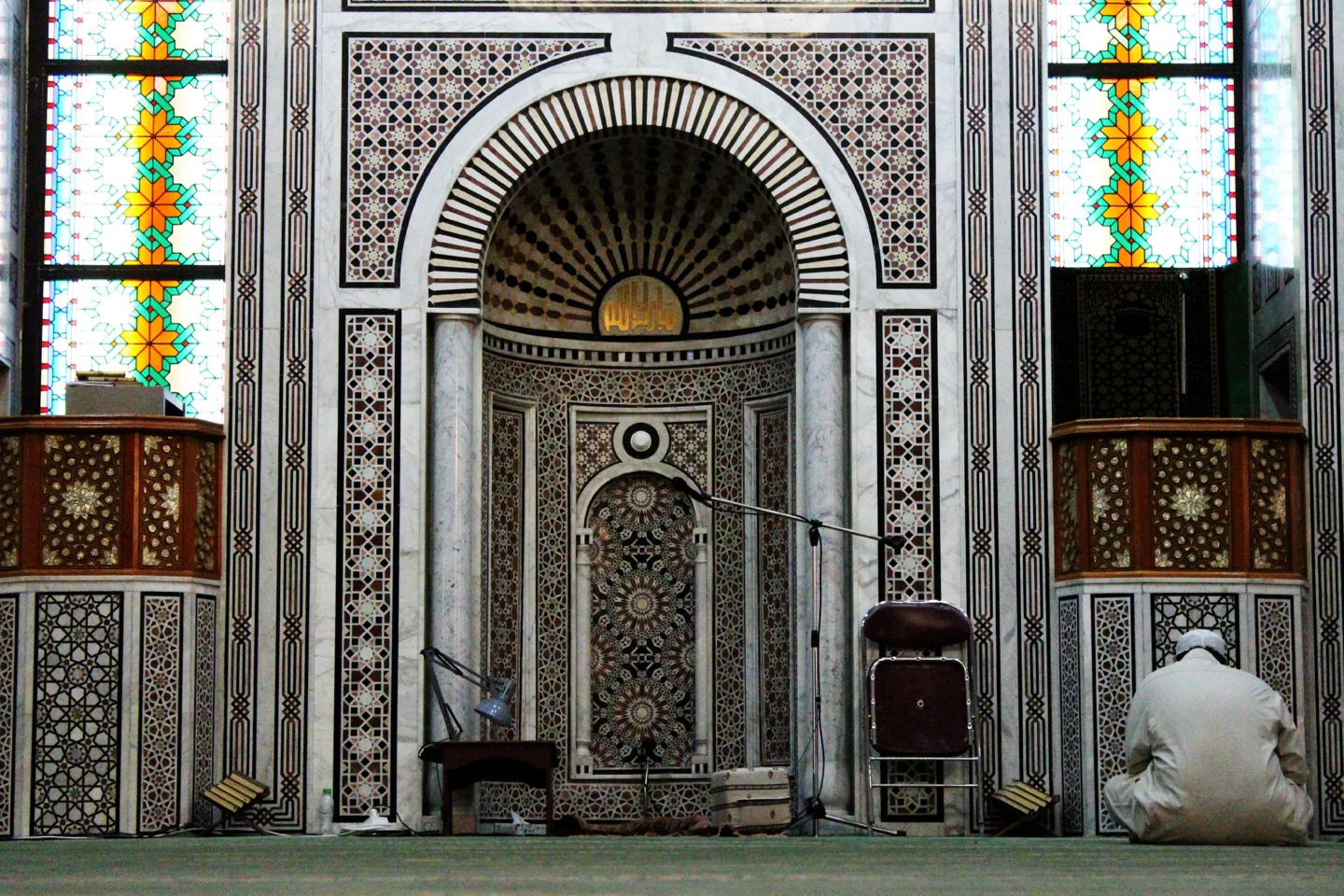
Saudipedia describes eight columns supporting the main dome, decorative ceiling work and stained glass around it. These provide specific observation questions when interior access is permitted: how is the dome supported, where does natural light enter, and how do repeated geometric forms connect different surfaces? Avoid touching decorative elements or interfering with worship to inspect them.
Separate exterior observation from interior access
Tell your guide which part matters to you. A programme based on a public exterior view is different from one requiring entry at a particular time. Confirm the current visitor arrangements directly with the responsible site or through an organiser able to verify them. Ask what is confirmed and what remains optional.
International visitors, including non-Muslim visitors, should not assume interior access from the attraction’s appearance in a tourism listing. Ask specifically about eligibility, timing, clothing and photography. If permission is unavailable or unclear, plan a permitted exterior stop rather than treating an attractive building as freely accessible throughout.
When instructions change at arrival, follow the staff’s direction and adapt the programme. A tour guide’s role is to explain and coordinate the permitted visit, not to override site rules. Keep a nearby coastal observation or another suitable stop as an alternative, confirming any private venue’s arrangements separately.
Respect prayer and the site’s instructions
Choose modest clothing and ask about specific dress requirements before any proposed entry. Follow the arrangements for footwear, permitted visitor areas and movement inside. Keep voices low and avoid standing in entrances or routes used by worshippers. Do not turn the prayer space into a gathering point for a loud group explanation.
If you also intend to pray, allow for that separately from sightseeing and agree where companions will wait. A tourist schedule should not require rushing worship or disturbing others. Explain to children before arrival that this is a place of worship, and choose a short, calm visit suited to their ages.
Choose timing around the purpose
A daylight exterior visit may help you observe architectural detail, while later light can change the scene over the water. Check sunset for your date if that matters to photography. Neither attractive light nor a broad online opening-hours label guarantees a permitted interior visit at that moment.
Check the current arrangements for the proposed visit and allow for prayer, access conditions and the group’s pace. This guide does not promise unrestricted access around the clock. If your time is limited, a well-explained exterior stop can be more useful than waiting for an interior that has not been confirmed.
Photography without disturbing worship
Begin from a permitted public position and frame the mosque with its sea setting. Choose a view that explains the building’s relationship with the coast, then consider a detail such as an arch or part of the minaret. Avoid climbing barriers, entering restricted spaces or blocking the walkway for a better angle.
Ask before photographing interior areas and identifiable people. Permission to enter does not automatically mean permission to take every picture. Avoid flash during worship, and put the camera away when staff ask you to. For a commercial shoot or organised session, establish the required arrangements beforehand.
The photographs here are dated references: the featured exterior is from May 2025, while the details are from October 2013. They help illustrate architecture and are not proof of present entry or photography permission. If current access prevents a planned shot, choose an allowed exterior view instead.
Arrival, mobility and a clear return point
Check the exact location against your hotel and other coastal stops. Save a passenger drop-off or parking pin and a departure point, rather than expecting a driver to reach every viewing position. Ask about the walking distance from the vehicle to the place where the group will actually stop.
For a wheelchair, pushchair or visitor who needs to avoid steps, request details about surfaces, slopes, obstacles and the route to any permitted entrance. An exterior photograph cannot establish accessibility. A shorter visit with a suitable viewing position may work better than extending the walk to include every part of the surroundings.
Combine it with the coast or Historic Jeddah
The waterfront guide can help you choose a separate walk or break in the northern coastal area. Confirm the actual transfer between your selected points rather than assuming the mosque is at the entrance to every waterfront plaza. Add only the activities that fit the time available.
For a broader cultural day, combine this modern coastal landmark with the historic mosques of Al-Balad. The comparison can focus on setting and architecture, with access confirmed individually. Leave room for transport and a break rather than measuring the day by the number of mosques visited.
Questions to ask before fixing the programme
- Is this an exterior stop or a confirmed interior visit?
- What are the current visitor, clothing and photography instructions?
- Where will the vehicle stop, and how much walking is involved?
- Does the route suit the group’s mobility needs?
- What alternative is planned if access is unavailable?
Keep any tour fee, transport, private venue booking or other service separate from the mosque visit itself. Ask for clear inclusions rather than assuming every part of a city tour is covered by one description.
Frequently asked questions
Does a tour booking guarantee entry?
No. Site and date-specific permission and visitor requirements must be confirmed.
Can I photograph people praying?
Do not disturb worship. Ask permission for identifiable people and follow site instructions for photography.
Is an exterior visit worthwhile?
It can explain the sea setting, outline and architectural details from a permitted public position without relying on an interior visit.
Discuss the visit with Adel Alsulami
Contact Adel Alsulami, licensed Saudi tour guide, licence 40000511. Share your date, language, group size and whether interior access is important. Agree on the route, confirmed arrangements, transport and inclusions before booking.
Sources
- Visit Saudi: Al-Rahma Mosque.
- Visit Saudi: exploring Jeddah’s culture.
- Saudipedia: Al-Rahma Mosque.
- Featured image source: Diego Delso / Wikimedia Commons.
Reviewed 14 October 2026. Historical and architectural information is sourced; practical suggestions do not constitute entry permission or current operating confirmation.
Book the full Jeddah tour with Adel Alsulami — 5–8 hours, SAR 1,000
Planning a visit? Meet Adel Alsulami, your licensed Jeddah tour guide and discuss a private itinerary around your interests.