Eid in Jeddah: Hejazi Customs, Festive Atmosphere and a Visitor’s Guide
Eid in Jeddah has a flavour all its own, blending Hejazi customs handed down through generations with a modern festive atmosphere that fills the waterfront, the markets and the squares. If your visit coincides with Eid al-Fitr or Eid al-Adha, you have a chance to see the city at its most social and joyful — but also crowds and premium prices that call for planning. In this guide I share how Jeddawis live the Eid days, what you can do as a visitor, and how to avoid common timing mistakes.
Two Eids a Year
Muslims celebrate two Eids: Eid al-Fitr at the end of Ramadan, and Eid al-Adha on the tenth of Dhu al-Hijjah, coinciding with Hajj. Because the Hijri calendar is lunar, both move about eleven days earlier each year relative to the Gregorian calendar, so Eid may fall in mild winter or hot summer. Always check the expected date before booking, knowing the exact date is officially announced after the moon sighting.
Each Eid has its own character in Jeddah. Eid al-Fitr follows a month of lively Ramadan nights in Al-Balad, so it’s a natural continuation full of joy, sweets and visits. Eid al-Adha is tied to Hajj, and Jeddah, as gateway to the Holy Mosques, lives it to a different rhythm: heavy traffic at the airport and on the roads, many families travelling, and others gathering around the sacrifice and family feasts.
Eid Eve: The Final Hours of Preparation
Before Eid morning, let me tell you about Eid eve, which in Jeddah is an experience in itself. On the night before Eid al-Fitr, once the moon sighting is announced, the markets become a beehive: last outfits for the kids, last boxes of sweets for guests, last visits to the barber and tailor. Sweet shops stay open late, tailors deliver new thobes at the last minute, and families wander Al-Balad and the malls until midnight or later.
At home, trays are prepared, majlis rooms tidied, and dibyaza cooked for the morning. Older Jeddawis recall that houses in Al-Balad were cleaned and decorated days ahead, and that children slept with their new clothes beside them so they wouldn’t be late for Eid prayer. If you’re in Jeddah on Eid eve, spend an hour or two in Al-Balad’s markets — you’ll feel a festive energy like no other night of the year.
Eid Morning, Hejazi Style
Eid prayer
Eid begins with the Eid prayer early in the morning, in mosques and open prayer grounds. Men and children head out in new clothes, and the takbeer chants fill the neighbourhoods. After prayer, people exchange greetings, handshakes and embraces — one of the loveliest moments of the day.
Greetings
The most common Eid greetings in Jeddah are “Eidkum mubarak” (blessed Eid), “Kul ‘am wa antum bikhair” (may you be well every year) and “Min al-‘aydeen.” Typical replies are “‘Alaina wa ‘alaikum” or “Allah yu’eedu ‘alaina wa ‘alaikum.” Say one to a Jeddawi and watch the instant smile.
Eid breakfast and dibyaza
One of the best-known Hejazi Eid customs is preparing dibyaza, a sweet dish made from apricot paste (qamar al-din) with nuts and dried fruit, served on Eid al-Fitr morning in many homes. It’s rich and sweet, and for many Jeddawis it symbolises Eid as much as it feeds them. Alongside it come sweets, ma’amoul, shureik bread and cheese, and a varied Hejazi breakfast that gathers the family after prayer.
Eid Clothes
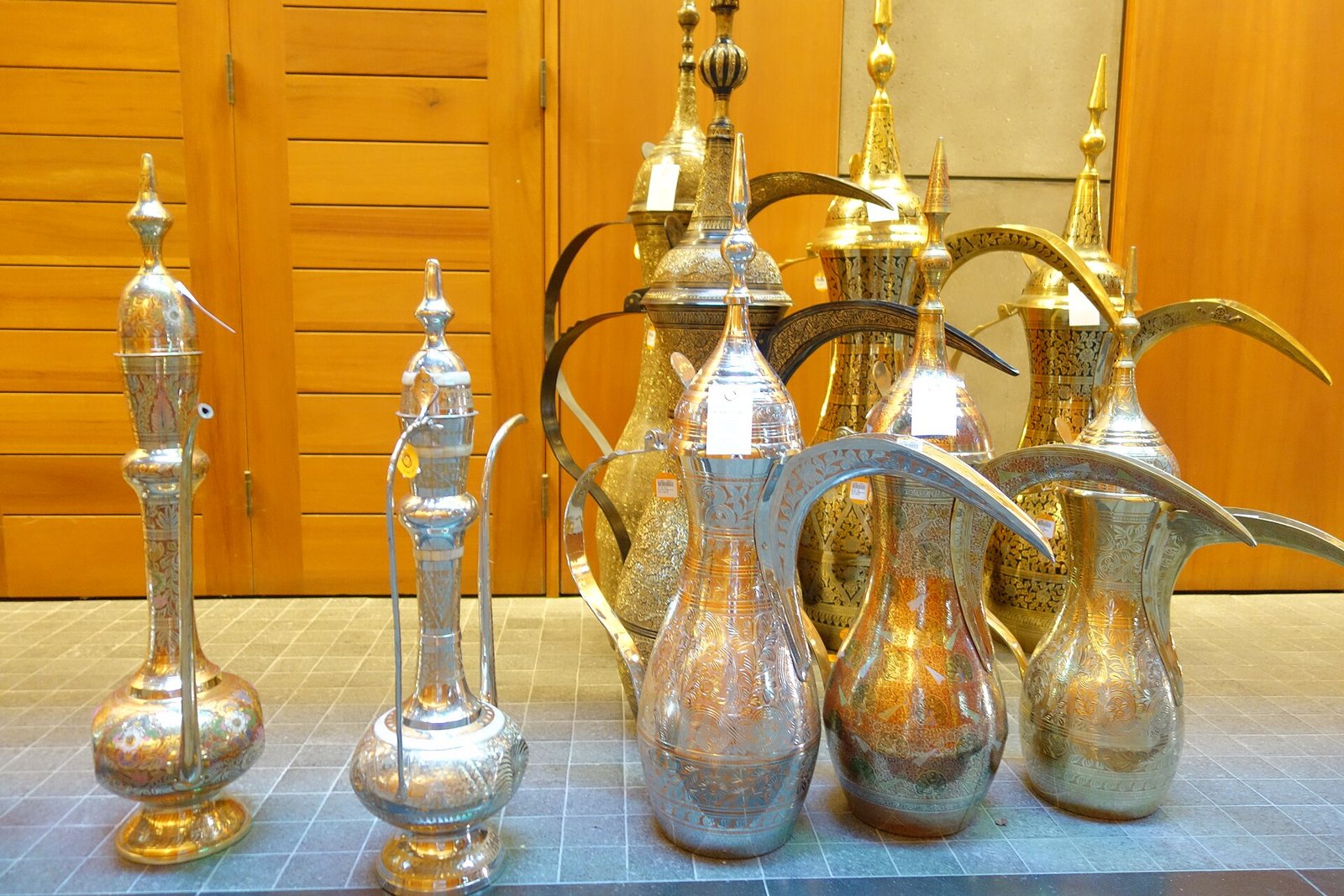
New clothes are central to Eid. Men and boys wear new white thobes, sometimes with a shemagh or ghutra, and in some Hejazi families traditional pieces appear at family occasions. Women and girls favour new outfits and henna, drawn on the hands in the last days of Ramadan. Henna shops and artists pop up in the markets before Eid — a lovely sign of the joy to come.
Eidiya: Children’s Delight
Eidiya is one of the sweetest Eid customs in Jeddah and across Saudi Arabia. Adults give children small sums of money, sometimes gifts or sweets, and kids collect their eidiya from relatives and neighbours all day. These days some people send it digitally, but the thrill of a crisp banknote in a child’s hand is still there. Many adults withdraw fresh notes from the bank before Eid specifically for eidiya — a small habit that says a lot about the care people give this day.
Family Visits: The Heart of Eid
Eid in Jeddah is visiting season. People start with the family elders, then relatives, then neighbours and friends. In Hejazi homes, majlis rooms open, and Arabic coffee, dates, sweets and nuts are served on trays to greet well-wishers. Visits often continue for days, making streets busy at unusual hours.
For visitors, this means two things. First, some small shops and family restaurants may close on the first or second day of Eid while their owners are with family. Second, if you’re invited to a Jeddah home during Eid, you’re very lucky — accept gladly; it’s an unforgettable experience of hospitality.
Eid in Historic Jeddah
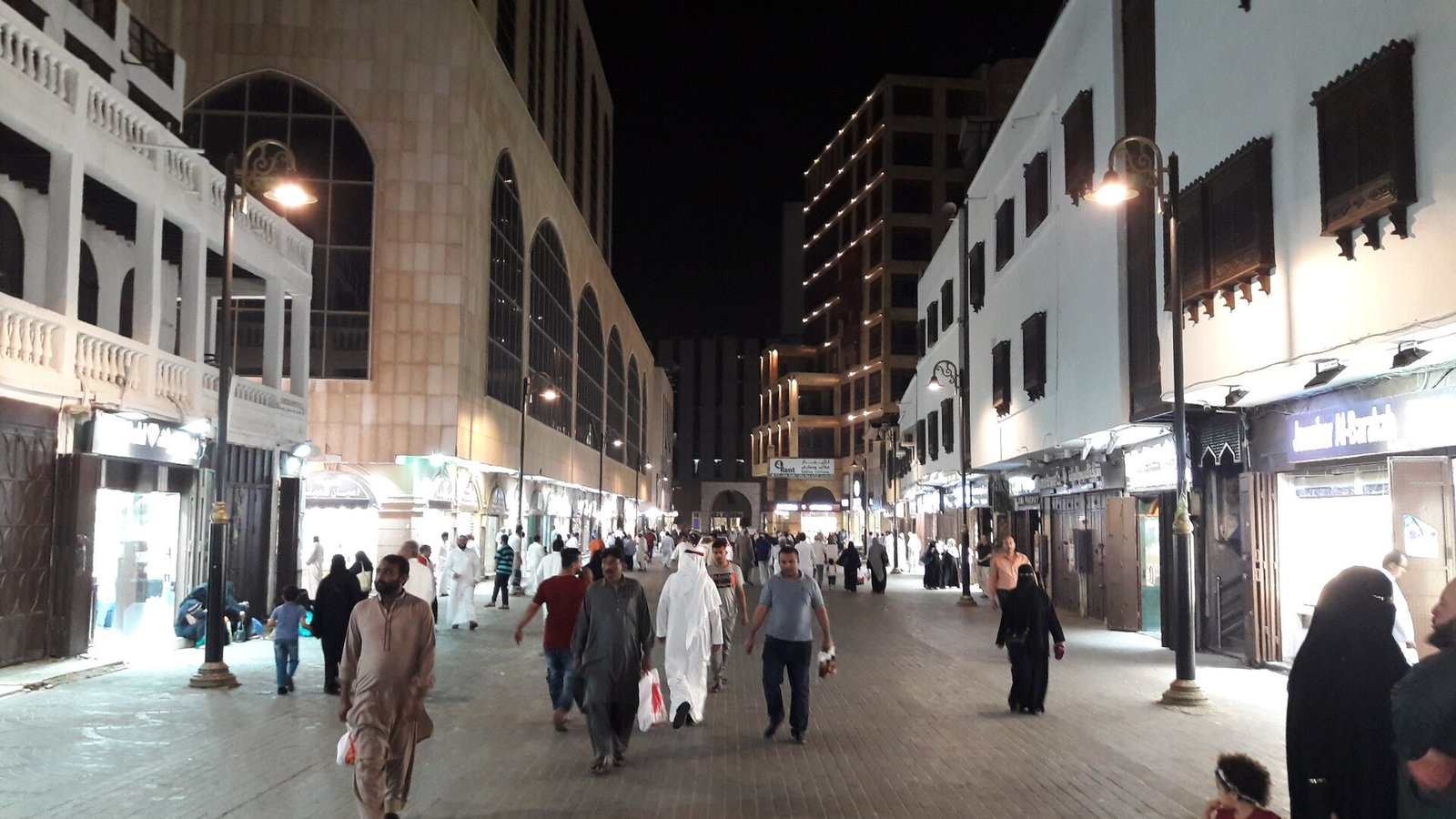
During Eid al-Fitr in particular, Historic Jeddah remains special. The last days of Ramadan and Eid eve bring heavy shopping in Al-Balad’s souqs for clothes, sweets and perfumes. During Eid itself, the lanes fill with families strolling in their Eid clothes, and in some years heritage celebrations are held. To see Al-Balad in festive mode, include Eid eve or the evening of the second day in your plans.
Eid on the Waterfront
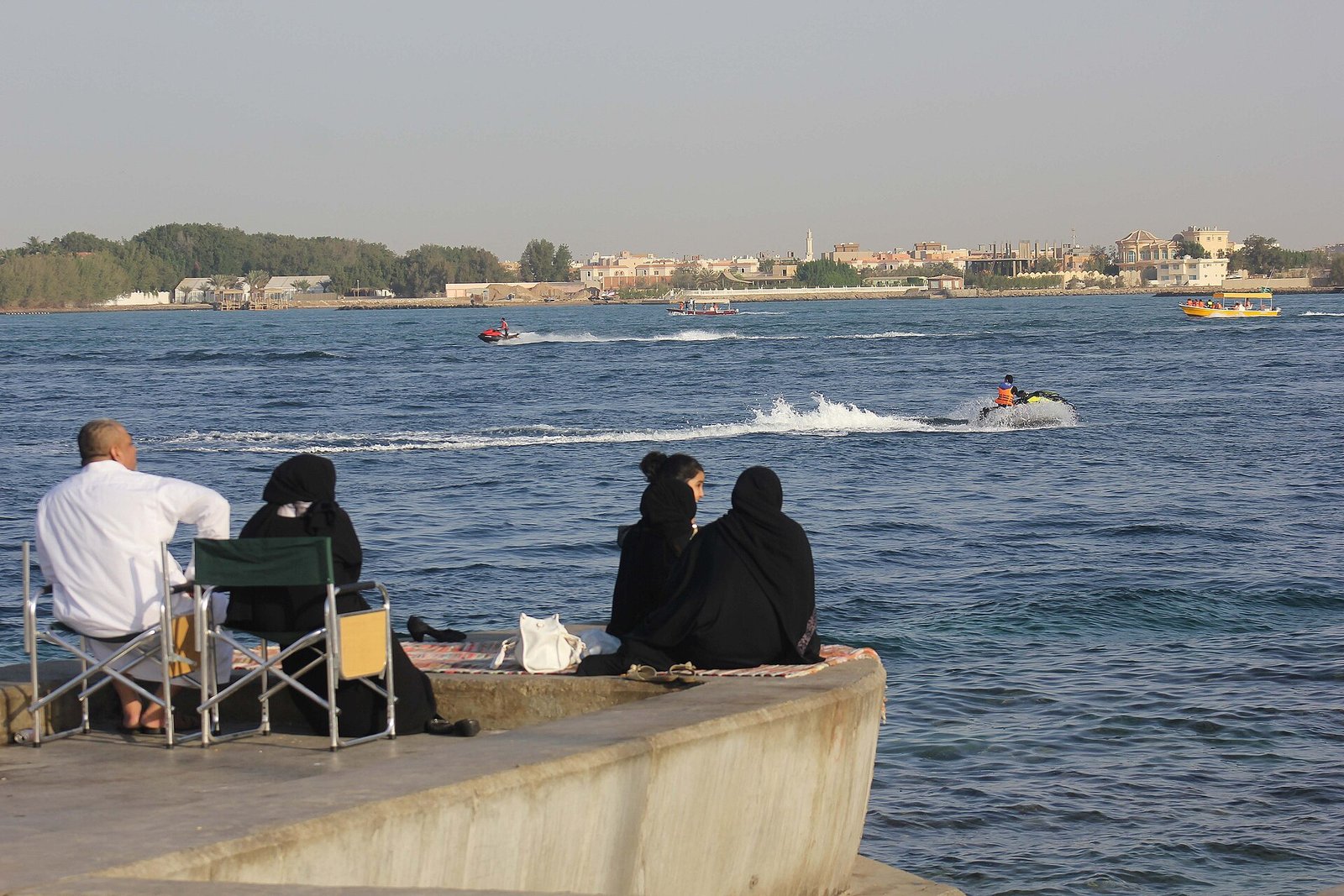
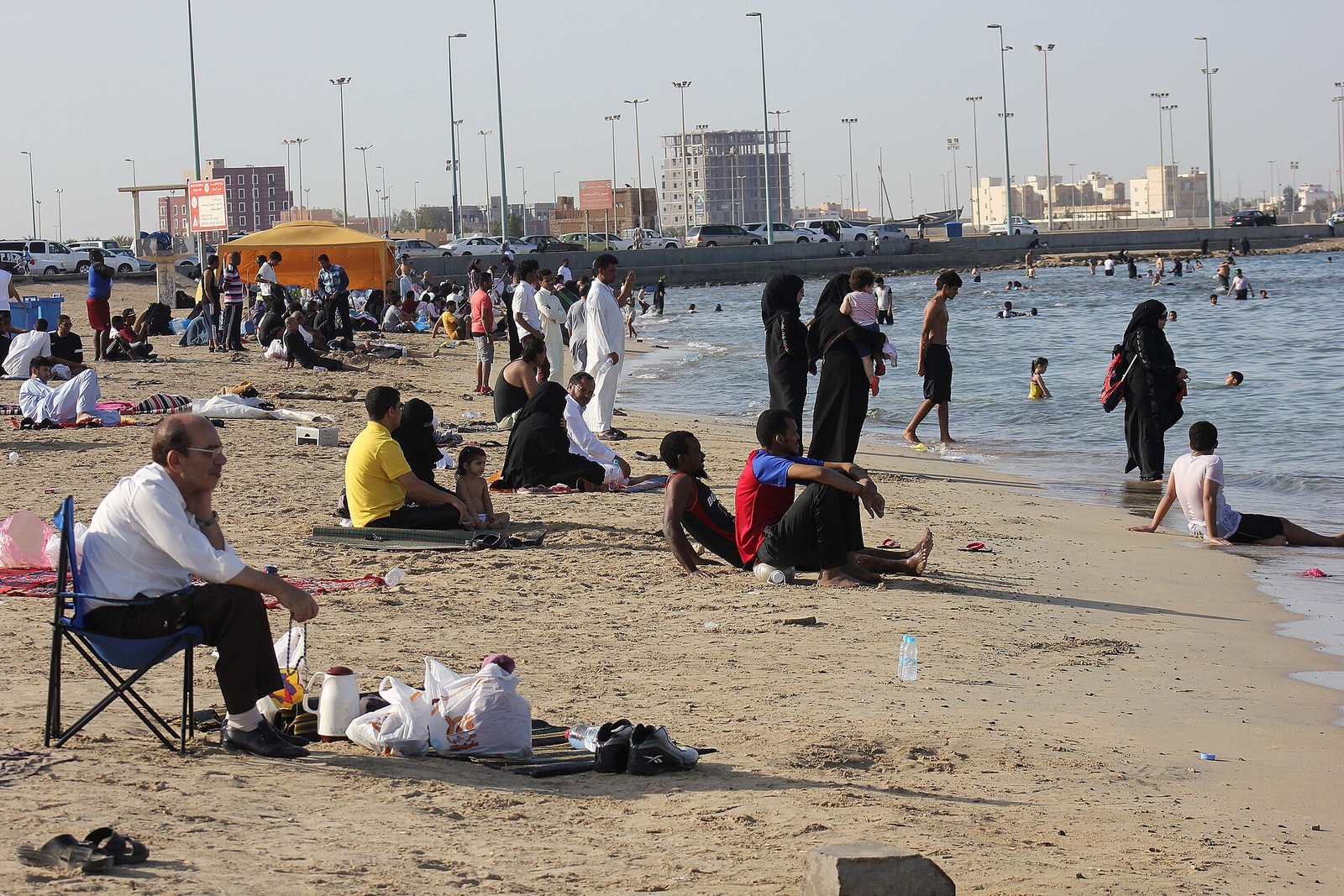
The Waterfront and Corniche are families’ first choice on Eid evenings. You’ll find lawns packed, children in new clothes, roaming vendors and a cheerful family atmosphere. In some years, fireworks and celebrations are held on the Waterfront or elsewhere in the city, announced through official accounts a few days before Eid.
Important: if there’s a fireworks show or major event, go very early or stay away entirely. Roads to the Corniche become heavily congested, and finding parking can take a long time.
Eid al-Adha in Jeddah: A Different Rhythm
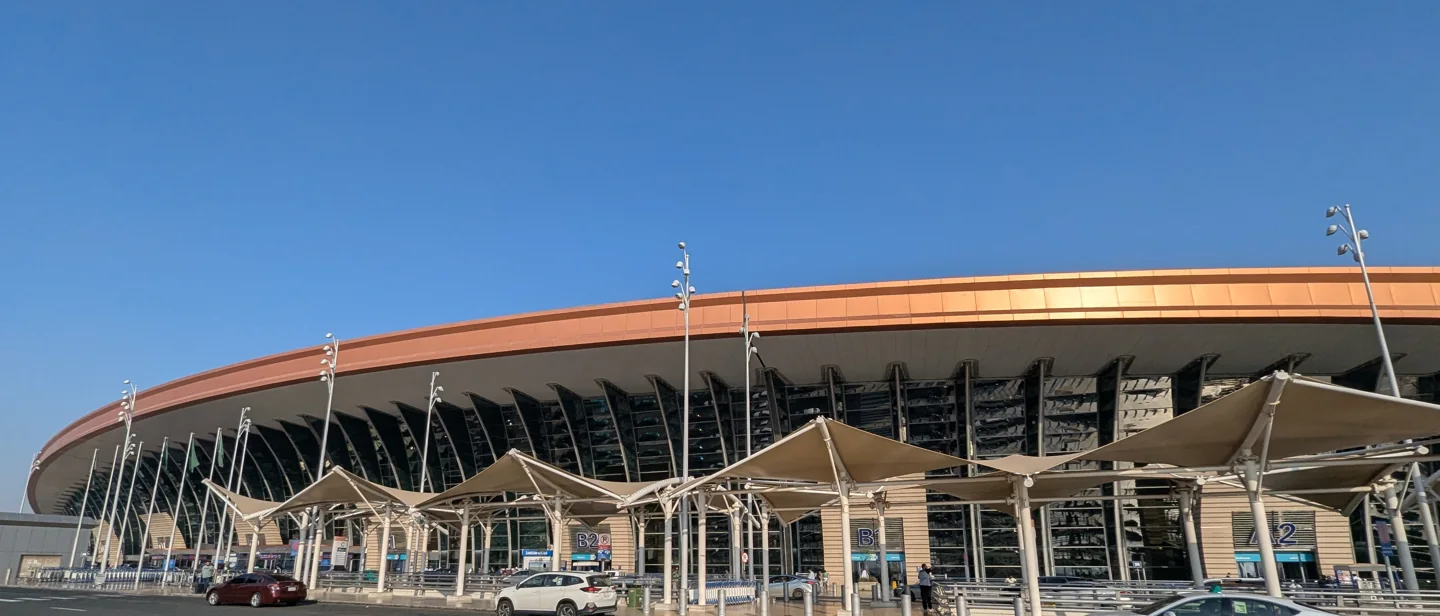
Eid al-Adha in Jeddah is shaped by Hajj. In the days before Eid, King Abdulaziz International Airport sees exceptional traffic, and roads to Makkah are congested. During Eid, many families are busy with the sacrifice, feasts and distributing meat to relatives and those in need. Others travel out of the city, so some neighbourhoods are quieter than usual.
After Hajj, many pilgrims pass back through Jeddah, so the airport and markets come alive again — especially Al-Balad’s souqs, where pilgrims buy gifts for their families, just as they have for centuries.
Where to Spend Eid as a Visitor
- Historic Jeddah: heritage atmosphere and families in Eid clothes, especially on Eid al-Fitr evenings.
- The Waterfront: family outings, open spaces and events where held.
- Malls: open and sometimes hosting kids’ shows — a good choice if Eid falls in summer.
- Hejazi restaurants: to try Eid dishes if you’re not invited to a home — book ahead.
- Northern beaches: many families spend a day by the sea in Obhur during the Eid holiday.
If you’re staying longer, make the most of the days right after Eid: activity returns gradually, the mood is still festive, and crowds are lighter than the first days.
Tips for Visitors During Eid
- Book early: hotels, tours and popular restaurants fill up, and prices rise.
- Expect closures: some small shops close on day one; government offices are on holiday.
- Avoid peak road times: evenings are for visits and outings, so plan long trips in the morning.
- Dress smartly: people wear their best during Eid; you’ll fit in better if you do too.
- Carry small eidiya: if invited to a home with children, a small eidiya or box of sweets is a lovely gesture.
- Follow official accounts: for events, fireworks and timings.
- At Eid al-Adha: watch for airport and Makkah-road congestion before Eid and after Hajj, and allow extra time for flights.
A Suggested Eid Day in Jeddah
- Early morning: soak up the Eid prayer atmosphere and takbeer in the neighbourhoods, then a Hejazi breakfast.
- Late morning: rest — most people are on family visits and the city is relatively quiet.
- Afternoon: Historic Jeddah, to see families in Eid clothes and the souqs open.
- Sunset: Al-Rahma Mosque by the sea.
- Evening: the Waterfront’s family atmosphere, plus a festive event if there is one.
- Dinner: a seaside restaurant, booked in advance.
Eid Through a Guide’s Eyes
Eid is one of my favourite times to guide, because the city shows its true social face. But it also demands precise timing: when Al-Balad is at its best, when the Corniche gets jammed, which roads to avoid. On my Historic Jeddah tour and full Jeddah city tour, I shape the programme around the rhythm of Eid so you enjoy the atmosphere without losing your day to traffic. If you’ll be in Jeddah during Ramadan before Eid, read my Ramadan in Historic Jeddah guide.
FAQ
Are shops open during Eid?
Malls and large restaurants are usually open; some small shops close on the first day. Traditional markets come back to life gradually.
What is dibyaza?
A Hejazi sweet made from apricot paste, nuts and dried fruit, served on Eid al-Fitr morning in many Jeddah homes.
How do I greet people at Eid?
Say “Eidkum mubarak” or “Kul ‘am wa antum bikhair”; the usual reply is “‘Alaina wa ‘alaikum.”
Are there fireworks in Jeddah at Eid?
In many years, celebrations and fireworks are organised, with times and locations announced through official accounts before Eid.
Can non-Muslims join the Eid atmosphere?
Yes — public celebrations are open to everyone, and people are happy to receive visitors’ greetings. Just respect prayer times and prayer grounds.
Is Eid a good time to visit Jeddah?
Yes for the festive mood, but with crowds and higher prices. Book early and plan your movements smartly.
The Takeaway
Eid in Jeddah is the city in its finest clothes: morning takbeer, dibyaza on the table, eidiya in children’s hands, endless visits, and families filling Al-Balad and the Corniche until midnight. Learn the rhythm of these days and plan well, and you’ll experience Jeddah as its people do — and go home with memories from the best days of the year. And don’t forget to wish everyone you meet a blessed Eid, from the shopkeeper to the driver: “Eidkum mubarak” opens hearts and makes you part of the joy rather than a spectator.
Experience Eid in Jeddah With a Local
I’m Adel Alsulami, a licensed tour guide in Jeddah with more than eight years of experience. I’ll plan a tour that fits the rhythm and spirit of Eid.
📞 Call & WhatsApp: +966 50 444 6088 (WhatsApp)
✉️ Email: Adel@iAdelAlsulami.com
👉 Book your tour now
Planning a visit? Meet Adel Alsulami, your licensed Jeddah tour guide and discuss a private itinerary around your interests.