
Saleh Al-Amoudi House in Historic Jeddah: A Family Story on Abu Inabah Street
A sign bearing the name Saleh Al-Amoudi is one way into the story of this house in Historic Jeddah. The building stands on Abu Inabah Street, where a family member’s published recollections link the house to several generations. For visitors, it is a reminder that a walk through Al-Balad can bring the history of a street into focus, even when the visit is confined to a view from public space.
Finding the house on Abu Inabah Street
In a 2014 interview with Al-Eqtisadiah, Omar Saleh Al-Amoudi placed the home on Abu Inabah Street. He referred to Ba Jasir House beside it and Banajah House behind it, and named Ba Dhib and Al Batterjee houses on the same street. These descriptions offer a picture of heritage houses standing close to one another. Use the house name and street as orientation, and confirm your route locally if signs or access have changed.
What a former resident remembers
Omar recalled living in the home during his early school years before the family moved to the north of Jeddah. The interview describes the house passing through several generations, including his own. His account of big homes in the area explains how different generations of an extended family could share a building. It adds a human dimension to a short exterior visit. Details from that interview are best read as one family’s experience of the house and neighborhood.
How the house fits into the wider historic district
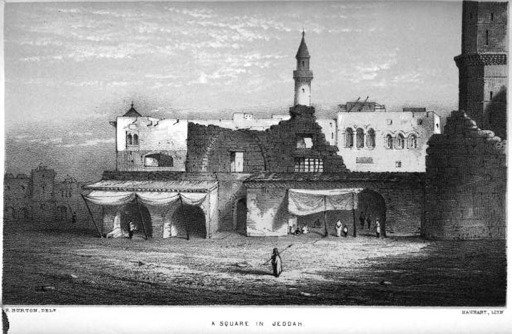
UNESCO describes Historic Jeddah as a port shaped by maritime trade and pilgrimage, with an architectural tradition known in part for its tower houses. That provides context for the area around Abu Inabah Street. The newspaper interview gives you the more specific account of the Al-Amoudis’ house. Reading the two together lets you place the family on the map of the old city without assuming that every building shares the same date or layout.
Looking closely while you walk
Start by looking for the sign from a public point in the street. Take a wider view of the space around the building, then notice how the façades and narrow lanes shape the line of sight. If you take photographs, leave room for people moving past and respect the privacy of buildings in use. The cover image records the identifying sign as it appeared in a photograph taken in 2020. Treat it as a reference for the house’s identity and allow for changes in signs or street access.
Pair the stop with another house
Banajah House is a useful related read if you want to compare the stories associated with nearby properties. Look up the names before you go, and agree on a meeting place your whole group can find. If you want an interior visit, build it around a heritage house whose opening you have confirmed. The Al-Amoudi stop can fit comfortably into a walk based on viewing from the street.
Inside the house as its former resident describes it
Omar’s account distinguishes between the ground-floor reception room and the family’s living areas above. He calls the reception room the maq’ad and describes a wooden seating area and a roshan facing the street. From outside, the relationship between a reception room and a street-facing window gives you a useful way to think about the role of a façade in daily life.
The rooms and services shared by the family
The interview describes two residential units on each of the first three upper floors, with a front room, an inner room and shared storage for some supplies. A narrow stair connected the floors. Omar also recalls an upper-level family kitchen and uses separate local terms for the ventilation space and water tank. These are details from his account of the house when the family lived there. They help explain how several generations could organise their own rooms and common services in one building. When you return to the street, think about the public side of the house and the family spaces that the interview describes beyond the façade.
This story begins with one family name and expands to a street where several households left their mark. That scale is what makes the stop worthwhile. By tracing one home through a published recollection, you get a tangible way to understand something of life in Al-Balad.
References Al-Eqtisadiah: interview with Omar Saleh Al-Amoudi · UNESCO: Historic Jeddah · Jeddah Historic District visitor site
Continue exploring Al-Balad Beit Banajah in Historic Jeddah · Al-Balad walking guide
Cover photo by Ashashyou · CC BY-SA 4.0 · Resized and compressed.
Planning a visit? Meet Adel Alsulami, your licensed Jeddah tour guide and discuss a private itinerary around your interests.