Historic Mosques of Jeddah: Al-Shafi’i, Al-Mimar and Visiting Advice
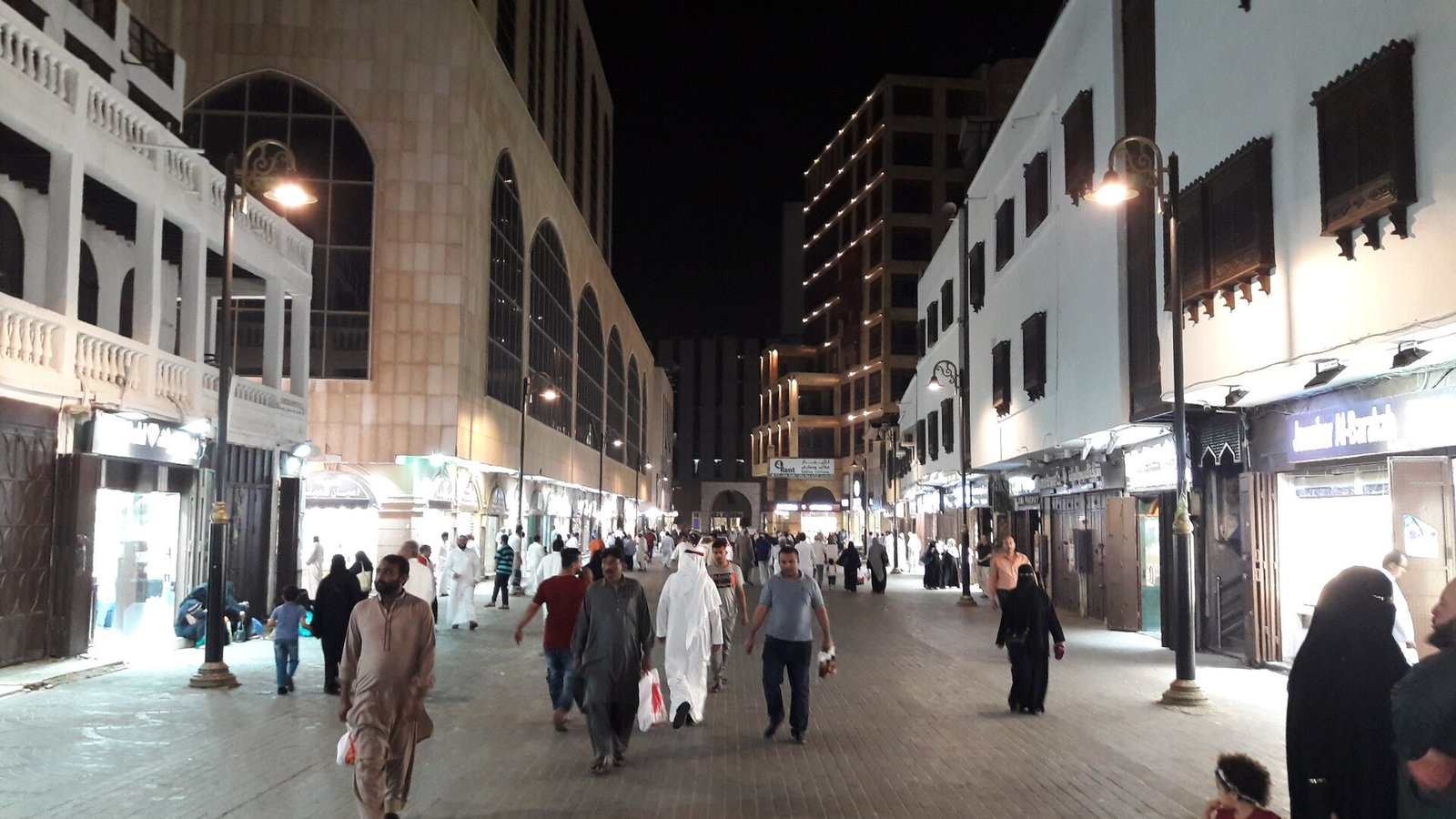
Jeddah’s historic mosques offer a different way to understand Al-Balad. A mosque is part of a neighbourhood of shops, homes, lanes and everyday movement. A thoughtful walk can connect a minaret or façade with that setting while respecting the building’s purpose as a place of worship. Viewing architecture from outside and making an interior visit are separate arrangements.
This guide introduces Al-Shafi’i, Al-Mimar and Al-Hanafi, with other names you may encounter in the district. It also suggests how to plan a considerate visit and take photographs. It does not provide general permission to enter or a single sightseeing schedule. For a first visit, combine it with the Historic Jeddah visitor guide.
Mosques within a living neighbourhood
UNESCO’s description of Historic Jeddah places mosques within an urban fabric that also includes houses, markets and public spaces. When you stop at a mosque, look at the lane leading towards it and the neighbouring buildings, rather than only taking a close photograph of its minaret. This helps you consider how different activities share the district without assuming that today’s scene reproduces every detail of the past.
Give each stop a simple question. How does the mosque relate to the market? What distinguishes its façade? Does an inscription refer to construction, architectural work or renewal? These questions lead to different kinds of observation. The history of Jeddah provides broader context for the city’s development.
Al-Shafi’i Mosque: the old congregational mosque
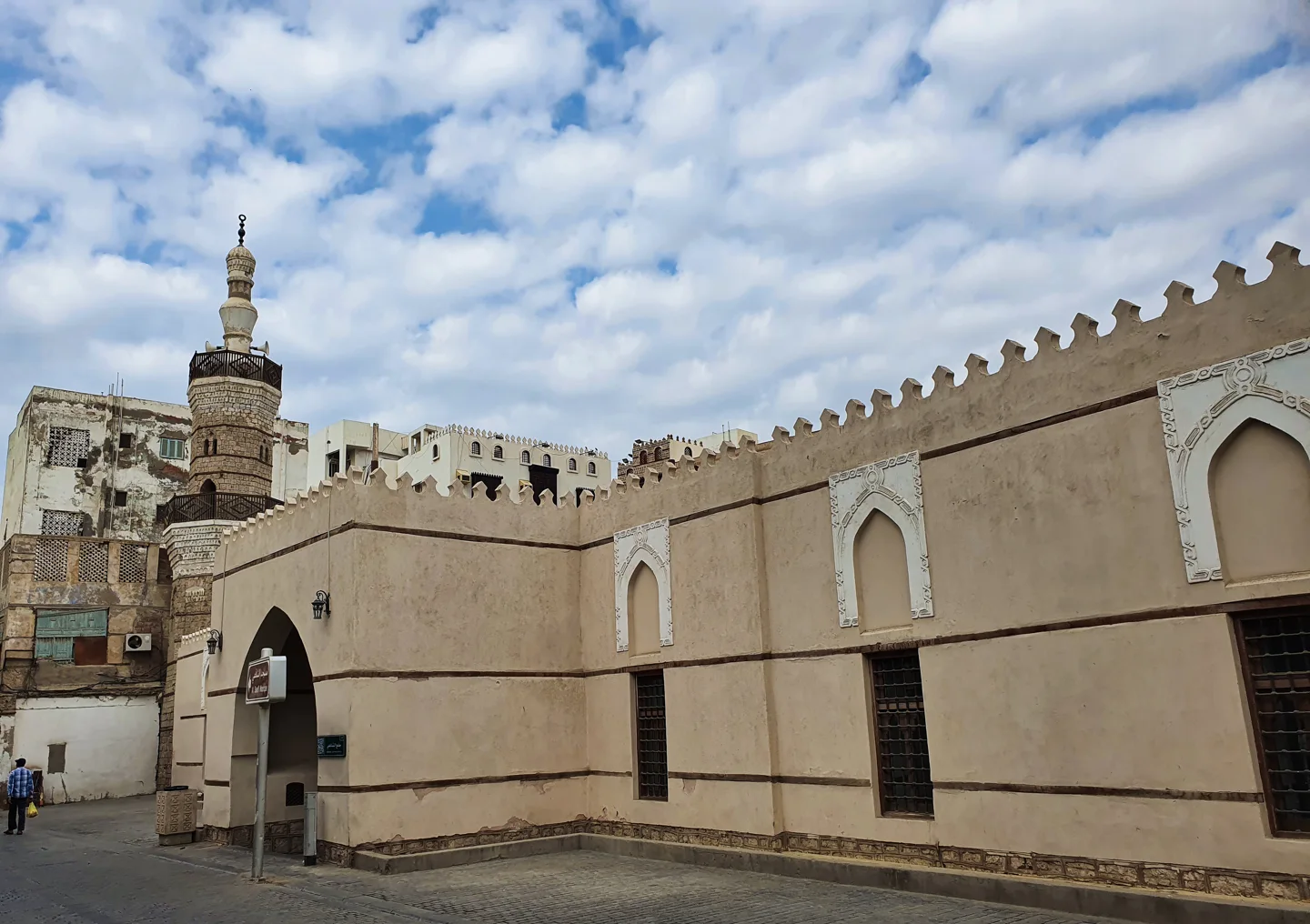
Saudipedia places Al-Shafi’i Mosque in the Al-Mazloom quarter and records its other name, Al-Jami Al-Atiq, the old congregational mosque. It describes an open courtyard and traditional building materials including timber, coral stone and marine clay. It also dates its reopening after restoration to 2015. An exterior stop can introduce the façade, minaret and their relationship with nearby streets.
Sources give different accounts of the mosque’s earliest phases, so this guide does not assign one age to the whole building. One specific piece of evidence appears in the Encyclopedia of the Kingdom of Saudi Arabia, published by King Abdulaziz Public Library: an inscription dating architectural work at Al-Shafi’i to 946 AH/1539 CE. That records a building phase; it is not automatically the date of first foundation or the age of every surviving part.
If you see an inscription or plaque, consider its wording before drawing a conclusion. A reference to renewal or architectural work may help establish what the date means. Ask for a sourced explanation when needed. The colour of stone or appearance of an ornament alone does not establish its age. The photograph used here was taken in December 2020 and records that scene, rather than current access arrangements.
Al-Mimar Mosque: reading the market setting
Saudipedia locates Al-Mimar in Al-Balad on Al-Alawi Street in the Al-Mazloom quarter, near Nassif Square and the approach to Al-Alawi souq. It describes a building raised above street level, with approaches differing by direction. It also mentions timber ceilings, interior inscriptions and reopening after restoration on 15 May 2018.
Those details make it a useful stop for considering the difference between street and building levels, and the proximity of worship to commercial activity. Accounts of its foundation dates vary, so this guide does not present a single definitive year for that earlier history. For a research-focused visit, consult documentation for each building phase rather than repeating an undifferentiated age.
If anyone in your group needs an easier approach, ask about the entrance available on the day. A historical description is not a guarantee of wheelchair access or an unobstructed route. You can arrange a short exterior stop and continue to the souqs of Al-Balad when your interests combine religious architecture and trading streets.
Al-Hanafi Mosque: an inscription and a building phase
The Encyclopedia of the Kingdom of Saudi Arabia places Al-Hanafi Mosque in the Al-Sham quarter and records an inscription dating architectural work to 1240 AH/1825 CE. It notes that the text is in Turkish written with Arabic letters. This is a specific example of writing used to document a building phase, rather than a reason to assign the same age to every element of the mosque.
When choosing Al-Hanafi for your walk, decide what you want to understand: its neighbourhood location, the inscription or a comparison of façades. Do not assume that all details can be seen from outside or that an interior visit is available at any time. If an element cannot be accessed, a sourced explanation can still form part of the stop without promising an indoor experience.
Other names: Uthman ibn Affan and Akkash
Saudipedia includes Uthman ibn Affan Mosque among Historic Jeddah’s mosques and notes its association with the name Al-Abnus. The Historic Jeddah website also lists Akkash among the district’s mosque landmarks. Consider an additional stop if it fits your route and your group has time, but a heritage listing does not by itself establish today’s sightseeing hours or admission arrangements.
Two or three considered stops are preferable to a long list of names with little explanation. Before setting out, match each name to the correct location, particularly if a map returns several results. A mosque in Al-Balad should not be confused with another building elsewhere in the city that has a similar name.
Plan around prayer times
First decide whether your aim is exterior architecture, prayer or a permitted interior visit. Then agree on the order of stops with your guide. If you are not visiting to pray, avoid obstructing worshippers arriving or leaving. Move the explanation to a nearby suitable façade or another stop when that is more considerate.
A programme combining a mosque, a market and residential architecture can follow one clear theme. You might begin with an exterior, continue along a trading lane, then look at a historic house or rawasheen. This is a planning idea rather than a guaranteed route. Confirm open paths, drop-off arrangements and the return point for your particular visit.
Clothing, entry and photography etiquette
Choose modest, comfortable clothing and follow the site’s instructions concerning footwear, dress and entrances. An open door does not automatically mean that a sightseeing visit or interior photography is permitted. Ask the responsible staff about access at that time and any specific arrangements for groups or women visitors. Follow the instructions provided.
For non-Muslim visitors, this article does not grant permission to enter. Confirm the arrangements with the relevant authority before including an interior stop in your programme. Exterior architecture and an explanation from an appropriate position can still provide a meaningful visit when entry is unavailable. Respecting the mosque’s instructions helps keep the experience comfortable for both visitors and worshippers.
Ask before taking interior photographs or clear portraits. Avoid flash, loud conversation or moving between worshippers for a shot. Outside, choose a safe position that leaves the lane open. A wide image of the mosque and its setting can be followed by a permitted architectural detail. Do not touch historic inscriptions or features to obtain a better angle.
Getting there and checking changing information
The Al-Shafi’i page on the Historic Jeddah website includes a map feature. Use it to locate the site, then confirm the meeting point with your driver or guide. The final approach may involve walking, so discuss the distance if you have children or older travellers in the group. Agree where the walk ends so that you do not need to search for the car afterwards.
This guide does not publish common sightseeing hours or a shared admission ticket for the mosques. Prayer, site management, maintenance and organised visits require separate checks for your date. Bring water and suitable walking shoes. Allow a break between stops rather than relying on being able to rest inside a mosque.
Frequently asked questions
Does the oldest quoted date describe the whole building?
Not necessarily. Distinguish foundation, later architectural phases and restoration, and use the source that documents the particular date.
Is interior entry automatically part of an Al-Balad tour?
No. Access, timing and the nature of the visit must be confirmed for each site before an interior stop is promised.
Can I photograph during prayer?
Respect worshippers and site instructions. Do not let photography disturb worship; seek permission for interior photographs and clear images of people.
Can one mosque stop explain part of Al-Balad?
Yes, when it is linked to its surroundings and a useful explanation. Careful observation matters more than the number of names on a checklist.
Explore Al-Balad with a local guide
Request a private tour with Adel Alsulami, licensed Saudi tour guide, licence 40000511. Explain your interest in architecture, religious history or photography, then agree on exterior stops, any entry requiring confirmation, prayer timing and inclusions before booking.
Sources
- Saudipedia: Al-Shafi’i Mosque (Arabic).
- Saudipedia: Al-Mimar Mosque (Arabic).
- King Abdulaziz Public Library encyclopedia: inscriptions at Al-Shafi’i and Al-Hanafi (Arabic).
- Historic Jeddah: Al-Shafi’i Mosque and map (Arabic).
- Saudipedia: Historic Jeddah (Arabic).
- UNESCO: Historic Jeddah.
Sources reviewed: 13 October 2026. Conflicting foundation dates have not been presented as settled facts. Current admission arrangements and prices are not confirmed here.
Book the Historic Jeddah (Al-Balad) tour with Adel Alsulami — 2–4 hours, SAR 500
Planning a visit? Meet Adel Alsulami, your licensed Jeddah tour guide and discuss a private itinerary around your interests.