Jeddah’s Open-Air Sculpture Museum: Moore, Miró and Calder on the Red Sea Corniche
Few visitors to Jeddah realise that, while strolling the Corniche, they’re walking past works by some of the twentieth century’s most famous sculptors. Henry Moore, Joan Miró, Alexander Calder, Jean Arp, Victor Vasarely and others — names you usually find in the world’s great museums — stand here in the open air on the Red Sea shore, passed every day by joggers, families and fishermen. This is Jeddah’s open-air sculpture museum, one of the city’s loveliest secrets, and in this guide I tell its story and how to visit.
Jeddah’s Love Affair With Public Art
To understand the museum, go back to the 1970s and 1980s, when Jeddah was booming. The city’s mayor at the time, engineer Mohamed Said Farsi, led an ambitious beautification programme driven by the idea that art should be part of everyday life, not locked away in halls. Squares, roundabouts and the Corniche filled with hundreds of sculptures and artworks, some by international artists and some by Arab and Saudi artists, until Jeddah came to be described as one of the world’s largest “open-air museums.”
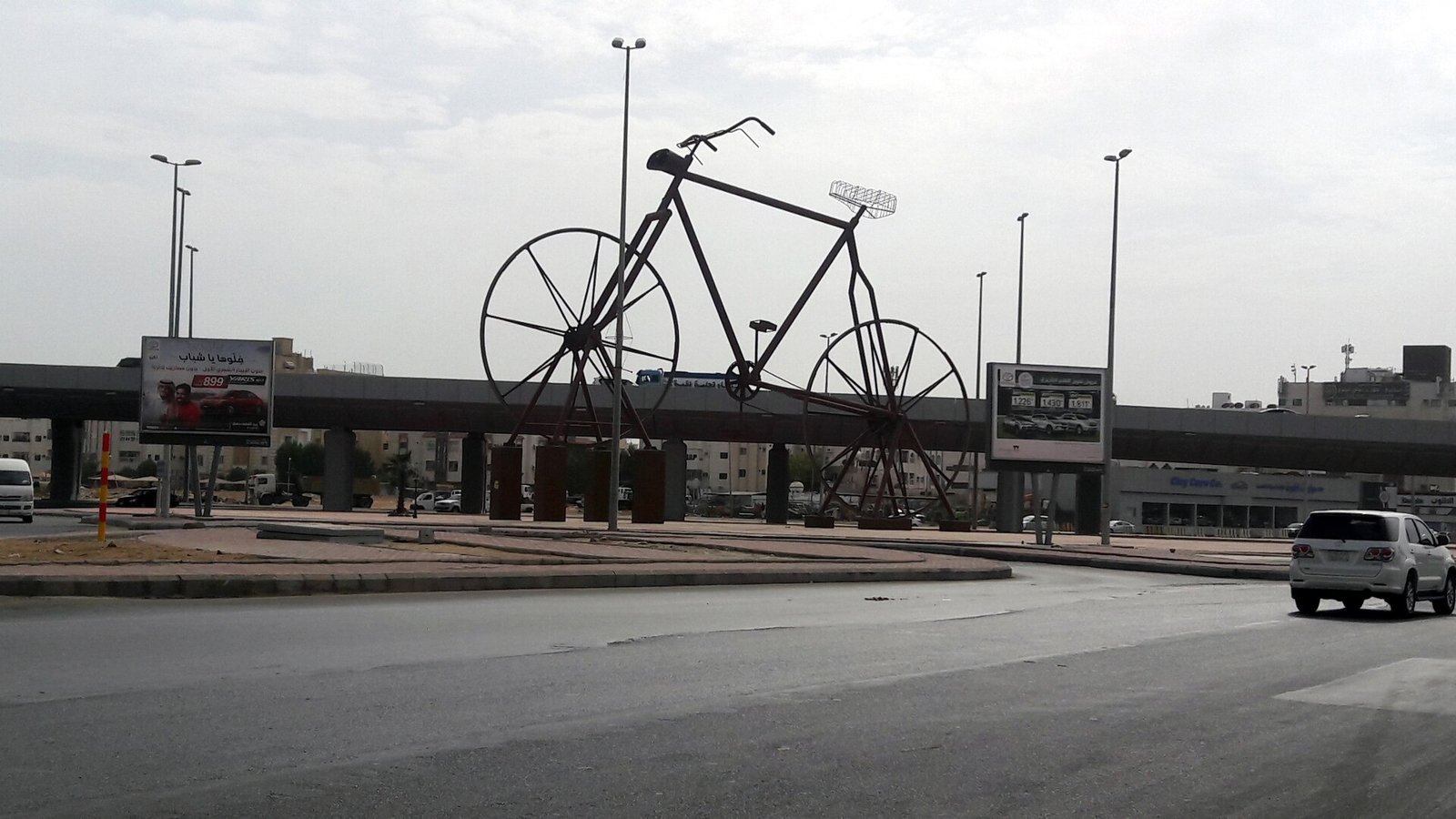
Some pieces became symbols every Jeddawi knows, used as landmarks for directions: “after the bicycle,” “at such-and-such sculpture.” Over the years, as urban planning changed, some works needed maintenance and restoration, and some were moved from their original spots.
The Birth of the Open-Air Museum
In 2013, a project led by Art Jameel was completed to gather, restore and relocate a number of the most important works to a single site on the Jeddah Corniche, forming what we know today as the open-air sculpture museum. The idea was simple and smart: rather than leaving important works scattered across roundabouts and at risk of neglect, bring them together in an open seafront space, restored and cared for, free for everyone to visit at any time.
Sources give different figures for the number of works, depending on what was added or moved later, but the collection certainly includes an important group of modern and contemporary works by artists from Europe and the Arab world.
Names You’ll Find
Henry Moore
The British sculptor known for organic, curving forms inspired by the human body and nature. His works stand in major museums and squares worldwide, so finding one on the Jeddah Corniche is a delightful surprise for art lovers.
Joan Miró
The Spanish artist known for bright colours and dreamlike forms close to the world of childhood and dreams. His sculptures carry the same spirit as his paintings: playful and mysterious at once.
Alexander Calder
The American artist credited with inventing the “mobile,” or kinetic sculpture, alongside his monumental stationary works. His pieces are known for bold lines and strong colours.
Jean Arp
A French-German pioneer of Dada and abstract art, known for smooth, rounded forms resembling pebbles and living organisms.
Victor Vasarely
The father of Op Art, who played with geometric shapes and colour to create a sense of movement and depth.
Other names
The collection also includes works by artists such as César, Jacques Lipchitz and Arnaldo Pomodoro, alongside Arab artists. Notable works linked to Jeddah’s art history include the monumental bronze The Verse Boat by Spanish artist Julio Lafuente and the stainless-steel Sunflower Field Fountain by Finnish artist Eila Hiltunen. Some works may move between the museum and other city locations, so enjoy discovering without expecting a fixed list.
How to Enjoy Modern Art If You’re Not an Expert
Many guests tell me on arrival, “I don’t understand modern art.” My answer is always: you don’t need to understand — just look. A few simple approaches:
- Start with feeling: before reading the artist’s name, look and ask yourself what you feel — calm, movement, strength, strangeness? There’s no wrong answer.
- Walk around the work: a sculpture isn’t a flat picture. Its shape changes completely as you circle it, and the back may reveal what the front hides.
- Notice the material: bronze, stone, steel? How does it cope with sun, salt and wind? Some works change colour over time — part of their life.
- Find the source: many abstract works are inspired by a human body, an animal, a plant or a wave. Guess, then look it up later.
- Read about the artist afterwards: learning the artist’s story after forming your own impression makes the experience much richer.
The Sea’s Challenge
Placing metal and stone sculptures on the seafront is no small decision. High humidity, salt and strong sun all affect materials over time, which is why regular maintenance is essential. Restoration was central to the museum project from the start, with works cleaned and treated before relocation. When you visit, compare the surfaces: some shine, others have acquired a dark layer from time — what sculptors call patina, sometimes intentional because it protects the metal and gives it character.
What the Art Says About Jeddah
Looking at this collection, I see something very like Jeddah itself. The city that for centuries welcomed pilgrims and traders from everywhere, absorbing their languages, foods and customs, also welcomed artists from Europe, America and the Arab world and placed their work in its streets as if it naturally belonged. The openness you taste in Hejazi cuisine and see in Al-Balad’s architecture is here too, in art. That’s why I don’t see the museum as foreign to Jeddah’s identity but as a modern expression of it.
Why It’s Worth a Visit
- World-class art for free: works of this calibre in the open air, no tickets or schedules.
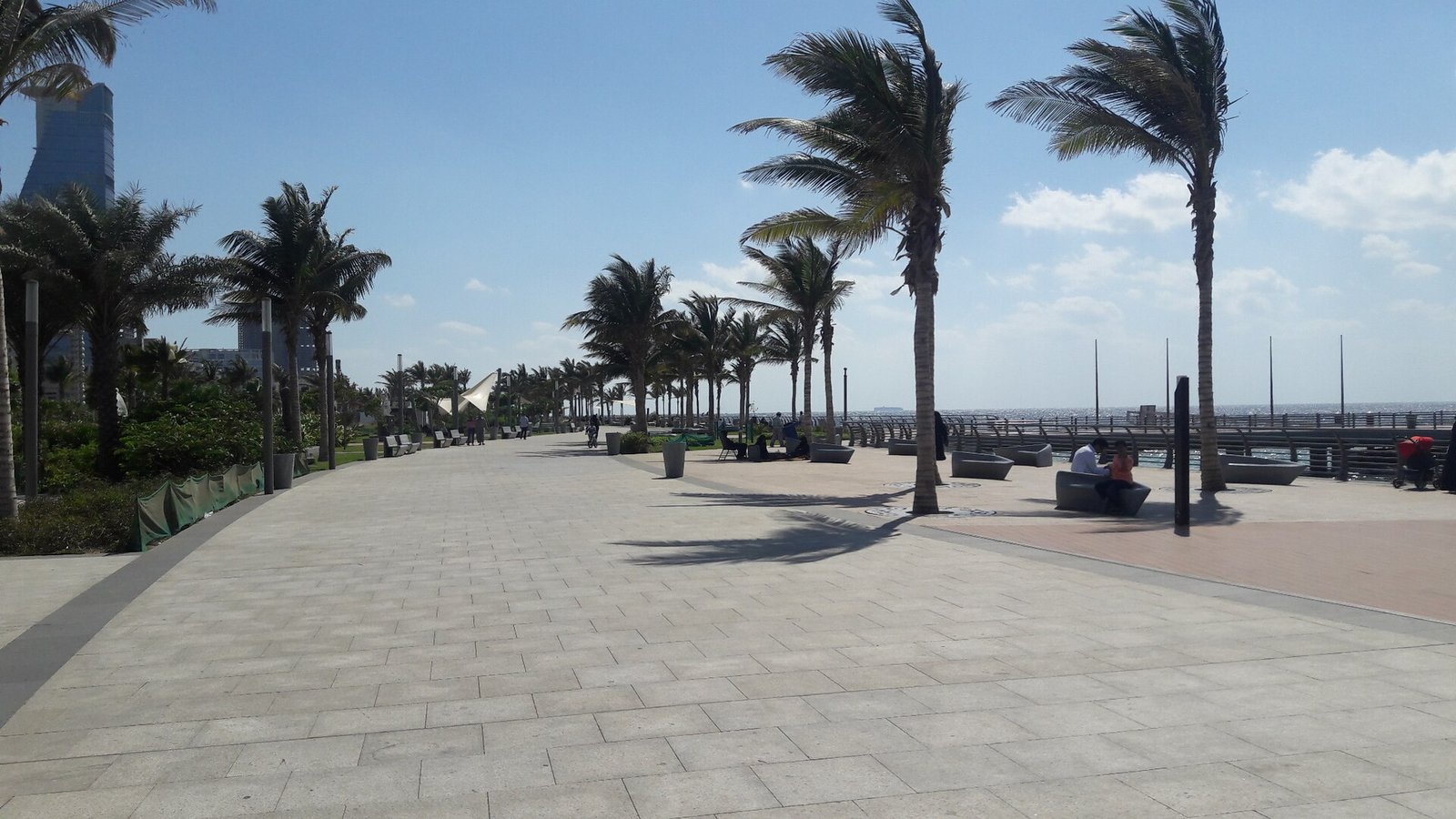
- The sea as backdrop: every piece stands before the Red Sea and sky, so the scene becomes part of the work.
- The city’s story: the museum tells an important chapter of modern Jeddah and its cultural ambition.
- For families: an open, safe place for kids to discover art in a fun way.
- For photographers: great opportunities for artistic shots unlike the usual Jeddah photos.
Best Time to Visit
- Early morning: calm, soft light and clear skies behind the sculptures — great for photography.
- Before sunset: golden light gives metal and stone a lovely sheen, and you can shoot sculptures as silhouettes against a colourful sky.
- Winter: pleasant weather allows long walks between works without fatigue.
- Avoid: summer middays — the site is open with little shade.
Visiting Tips
- Don’t touch or climb the works: they’re valuable artworks that need protection.
- Read the plaques: where available, they give the artist and title.
- Use your phone: look up each artist as you go — you’ll discover amazing stories.
- Bring water and a hat: the site is exposed to the sun.
- Combine with the Corniche: the museum is part of the waterfront, so make it part of a longer stroll.
- Allow enough time: at least an hour to wander and photograph without rushing.
Photo Ideas
- Sculpture and sea: get low so the work stands against sea and sky without distractions.
- Silhouettes: at sunset, shoot sculptures as black shapes on an orange backdrop.
- Details: move close to bronze or stone surfaces — texture, rust and weathering make beautiful abstracts.
- Scale: place a person beside a sculpture to show its true size.
- A series: shoot every work in the same style and angle for a cohesive album.
For more ideas, see my guide to Jeddah’s photogenic landmarks.
The Museum With Children
The open-air museum is one of the best places to introduce kids to art without boredom — no silence, queues or glass. Ideas that work with families:
- Guessing game: ask kids what each sculpture represents and give each work an invented name.
- Quick sketches: bring a small notebook and pencils and ask them to draw their favourite.
- Shape and colour hunt: “Who can find a circle? Who can find something red?”
- A story: tell them some works were made decades ago by artists in faraway countries, then came to live on Jeddah’s shore.
With the Waterfront and play areas nearby, the visit can easily become a half-day family outing.
Public Art Beyond the Museum
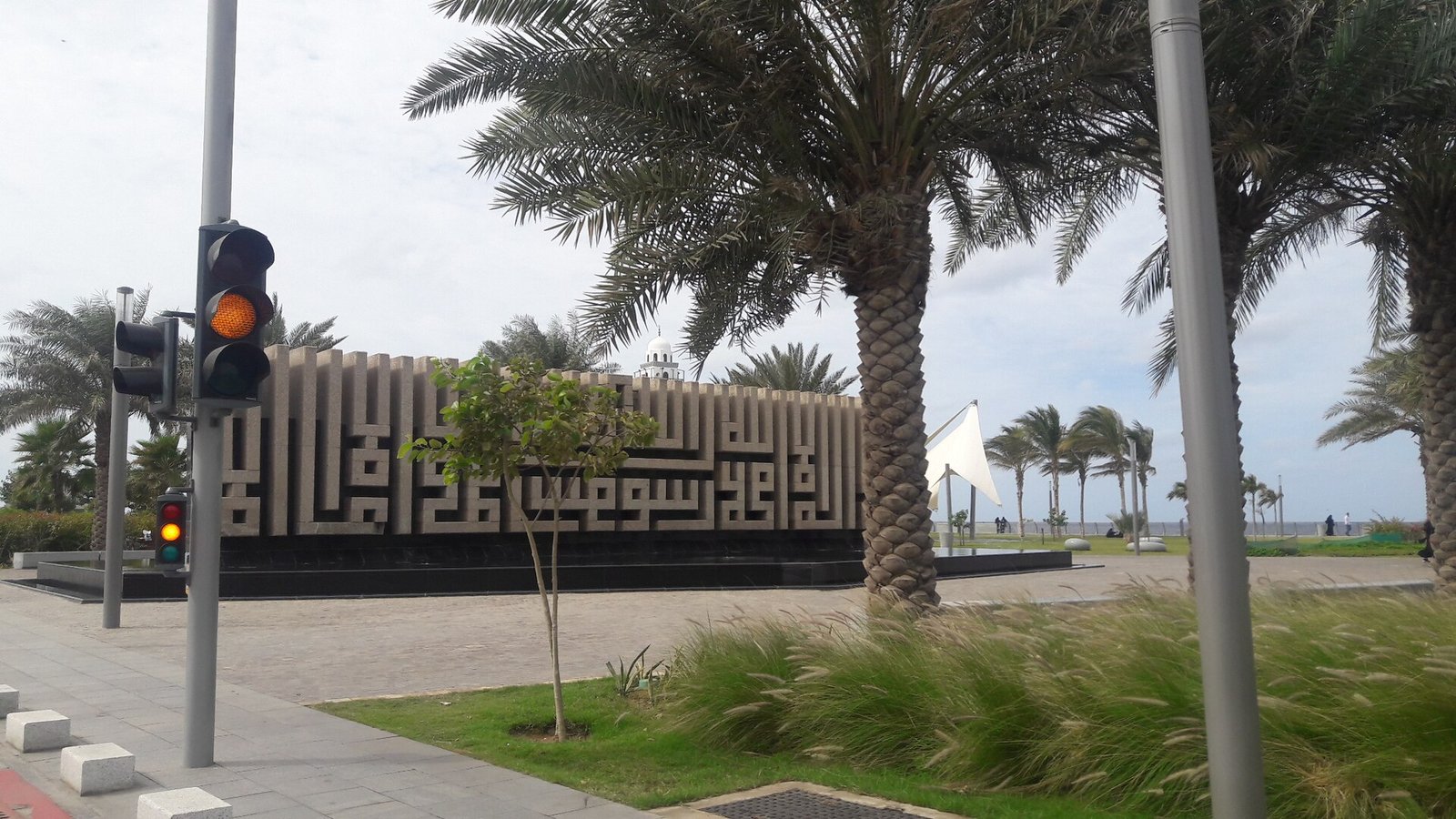
The museum isn’t the only place to find art in Jeddah. Many roundabouts and squares still hold sculptures from the same era, including Arabic calligraphy sculptures on the Corniche and pieces that have become local landmarks. In recent years, contemporary art spaces such as Hayy Jameel, major events like the Islamic Arts Biennale, and exhibitions in Historic Jeddah have joined the scene. Jeddah remains true to its old idea: art belongs among people.
Adding It to Your Tour
I suggest art-loving guests visit the museum in the morning, move to Historic Jeddah in the late afternoon, and return to the sea for sunset. On my full Jeddah city tour, I can add the museum to the route and explain the story of the city’s public art and its key works. If heritage is your focus, the Historic Jeddah tour takes you into Al-Balad’s lanes and rawasheen. For more on the waterfront where the museum sits, read my Jeddah Corniche guide.
FAQ
Where is Jeddah’s open-air sculpture museum?
On the Jeddah Corniche overlooking the Red Sea, as part of the city’s waterfront.
Is it free?
Yes — it’s open-air and free to visit.
Which artists are featured?
Highlights include Henry Moore, Joan Miró, Alexander Calder, Jean Arp and Victor Vasarely, alongside other international and Arab artists.
When did it open?
The project to restore and relocate the works to the site was completed in 2013.
Is it suitable for children?
Very — it’s open and close to the Waterfront’s play areas; just don’t let them climb the works.
When is the best time to visit?
Early morning or before sunset, especially in the milder months.
The Takeaway
The open-air sculpture museum proves Jeddah isn’t only a city of history and sea, but a city of art too. Standing before a Henry Moore with the Red Sea behind it and a salty breeze around you is an experience no closed museum can offer. Give this place an hour of your time and you’ll discover a side of Jeddah many visitors never see — and you may find yourself looking at the city’s roundabouts with new eyes, searching each square for the artist behind it and the idea that made a whole city decide to live with art in its streets.
Discover Artistic Jeddah With a Licensed Guide
I’m Adel Alsulami, a licensed tour guide and photographer in Jeddah with more than eight years of experience. I’ll plan a tour combining art, heritage and the sea.
📞 Call & WhatsApp: +966 50 444 6088 (WhatsApp)
✉️ Email: Adel@iAdelAlsulami.com
👉 Book your tour now
Planning a visit? Meet Adel Alsulami, your licensed Jeddah tour guide and discuss a private itinerary around your interests.