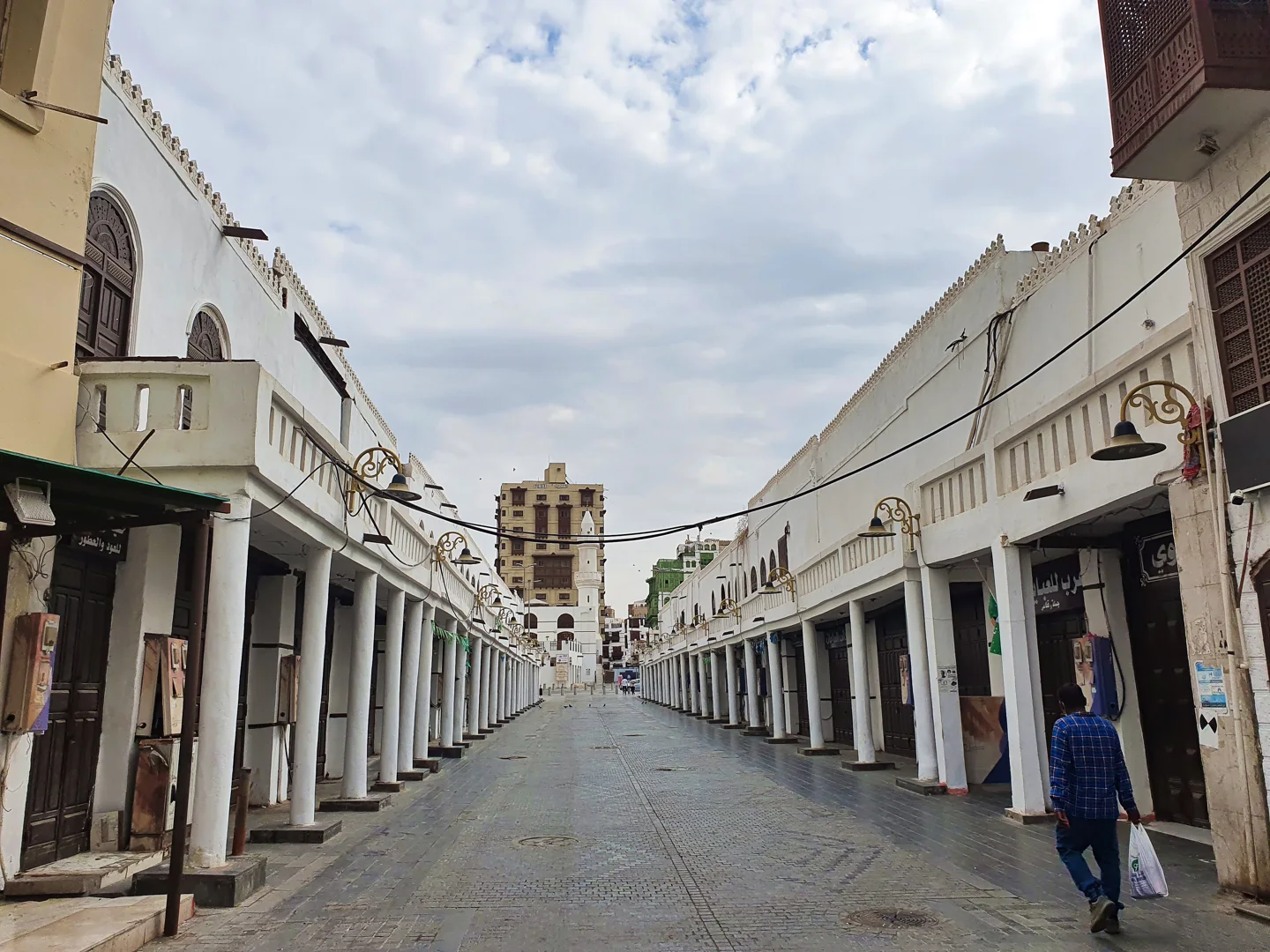
Historic Jeddah Souqs: Al-Alawi, Al-Badu and Shopping Advice
Jeddah’s historic souqs offer more than a shopping stop. In Al-Balad, a walk between shops can also become a way to understand the relationship between commerce, houses and everyday life. Before you set out, decide what interests you most: textiles, spices, a small gift, photography or the story of the city’s trading streets. That choice will help you build a manageable visit.
This guide covers Al-Alawi, Al-Badu, Qabil and Al-Nada, combining sourced background with practical suggestions for browsing and buying. For a first visit, use it alongside the Historic Jeddah visitor guide. Historical statements are drawn from the references below; the suggested walking and shopping arrangements can be adapted to your group.
Why the souqs matter to Jeddah’s story
UNESCO describes Jeddah’s connections with maritime trade and pilgrims arriving by sea, and the influence of those roles on its urban character. Its account places souqs within a wider historic fabric of houses, mosques and public spaces. A market visit therefore adds another layer to an architectural walk. For the broader background, read the history of Jeddah.
Notice how shops relate to the surrounding buildings and lanes. Think about the needs of buyers and the movement of goods, while keeping past and present separate. A shop you see today may have a different specialty from an earlier business in the same area. Ask about the actual product in front of you rather than assuming its origin or age from the historic setting.
Which Al-Balad souq should you choose?
Al-Alawi: understanding the commercial axis
The Historic Jeddah website describes Al-Alawi as a passage between the Al-Mazloom and Al-Yemen quarters, extending towards Bab Makkah. A historical Saudi Press Agency report places it between Qabil Street to the west and Al-Badu to the east. This provides a useful way to think about connected parts of the district, subject to the walking route available on your visit.
The official description mentions spice shops, textiles, sweets and leather products. Use these categories as an introduction to the souq, then check what individual open shops actually stock. If you are interested in spices or other ingredients, ask for the product name, intended use and storage advice. Buying a small quantity of something you understand is usually more practical than taking home an unfamiliar large package.
Al-Badu: a name connected with Bedouin customers
The Historic Jeddah website connects Al-Badu’s name with people from the desert who came through nearby Bab Makkah. It also describes a change from its association with grain trading to a present emphasis on textiles and women’s accessories. This illustrates how a market’s commercial role can evolve; it does not establish that every shop has the same specialty.
If you want fabric, have a colour, purpose and approximate quantity in mind. Ask about width, composition and the pricing unit. A price may refer to a metre, a cut length or a complete item. For sewing supplies, a clear photograph of the item you need can help when terminology differs between you and the seller.
Qabil and Al-Nada: choose a stop for your interests
Saudipedia includes Qabil and Al-Nada among Historic Jeddah’s markets and notes the presence of shoe shops in Al-Nada. Consider one of them if it suits your interests and the day’s route. You do not need to visit every named souq to enjoy the district. Two well-chosen stops with time to look, compare and rest can be more rewarding than a rushed checklist.
For shoes or accessories, inspect fit, materials and finishing, and ask about exchanges before paying. If your main interest is commercial street life, keep some time for the surrounding architecture. The guide to Jeddah’s rawasheen suggests details to notice as you move between shops.
What should you buy in Jeddah’s historic markets?
Start with a short list: fabric you will use, a small quantity of a familiar ingredient, or a gift suited to its recipient. A product sold in a heritage market is not automatically locally made or handmade. If provenance matters, ask about the country of origin, maker and materials. Look for a clear explanation rather than relying on a decorative label or the age of the street.
Before buying incense or perfume, try the scent if the shop allows it and check the container, quantity and closure. For food, examine ingredients, expiry information and packaging. International travellers should check their airline’s and destination’s rules for food, plant products and liquids before buying. Requirements differ, so there is no universal assurance that a souvenir can travel with you.
Compare quality, understand the price and keep a receipt
Compare like with like: the same quantity, comparable material and similar quality. Ask for the final price and whether wrapping or any additional service costs extra. There is no guaranteed discount percentage, and bargaining is not appropriate in every shop. If negotiation is welcome, keep it friendly. With a fixed price, simply decide whether the item suits your budget.
Request and retain a receipt, especially for purchases you might need to exchange. Ask about the shop’s policy before payment rather than assuming that returns are available at another branch. Leave heavy purchases until the end of the walk so that shopping bags do not limit your comfort or your ability to photograph the district.
Combine shopping with an architectural walk
Give the visit a simple structure: two market stops, an architectural landmark and a break. Bab Makkah may be a useful starting idea when it fits your arrival point, followed by the markets along the accessible lanes. This is a planning suggestion rather than a verified fixed walking route. Confirm the actual drop-off and pickup points with your driver or guide and account for works or closures on the day.
You could add an exterior stop at Nassif House or at rawasheen façades if they fit the route. Looking at a building from outside is different from admission to its interior. Confirm opening and what is included before expecting an indoor visit. If your group wants to buy specific items, set aside shopping time separately from the historical explanation.
Getting there, timing and comfort
Find the market on a map and match its name to your agreed meeting point. Similar names or multiple search results can confuse a first visit. The Historic Jeddah market pages linked below include map features. When arranging transport, give a specific point rather than only the district name, and agree where the walk will finish so that pickup is clear after shopping.
This guide does not give a single opening schedule or admission price for all the souqs. Check directly with a particular shop if it is the reason for your trip, and check any event or indoor experience separately. Choose a time suited to the weather, available light and your group’s pace. Bring water and comfortable walking shoes. Families and older visitors should discuss walking distance, breaks and surface conditions before settling on a route.
Photography etiquette in the souqs
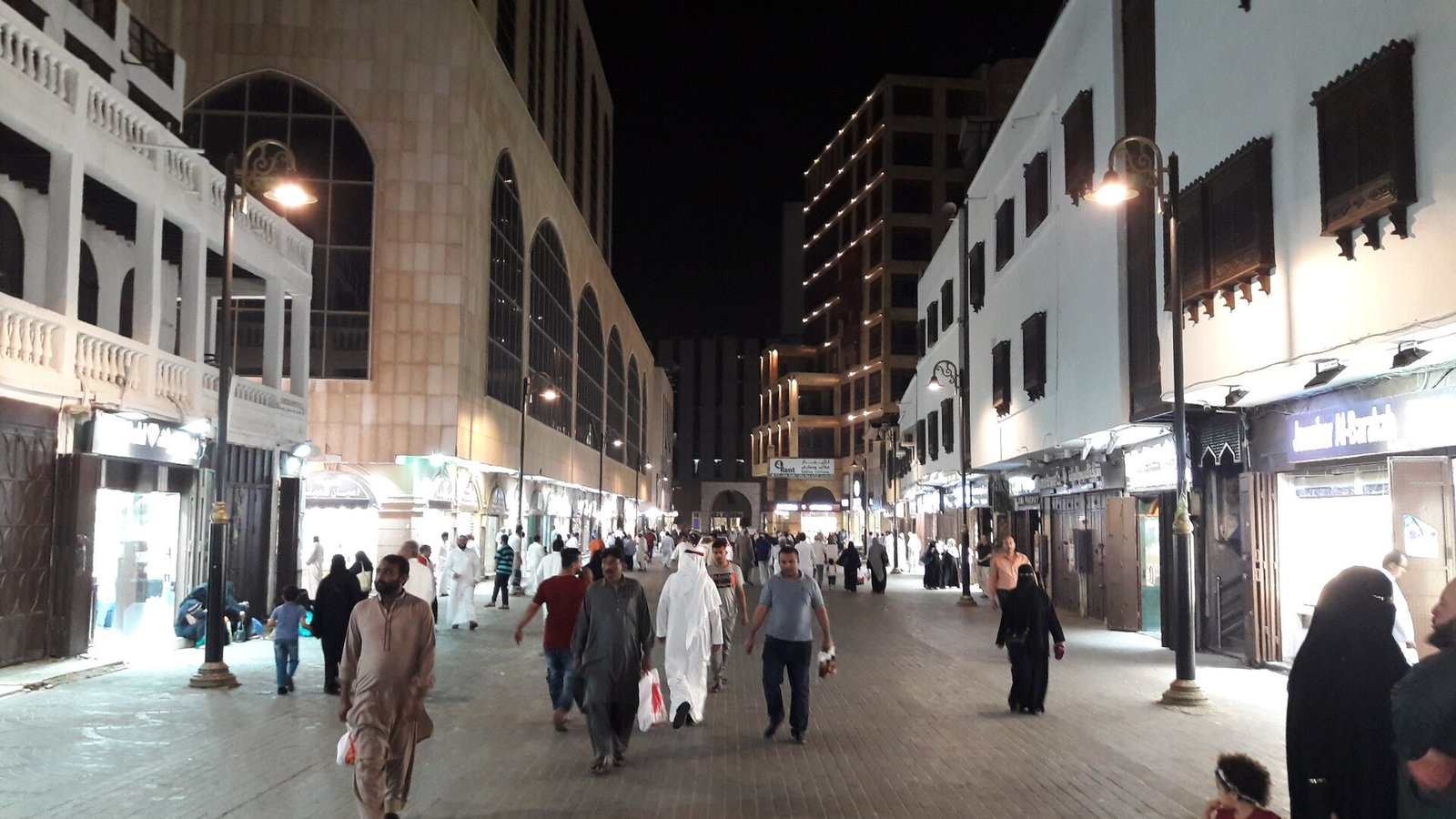
Photograph general street scenes from a position that leaves room for people to pass. Ask permission before making a clear portrait of a vendor or customer, or entering a shop mainly to photograph it. Do not rearrange merchandise without permission or block a doorway while people are buying. With bulky equipment, choose a route and timing that allow safe pauses.
You can combine a wide view with a detail of a façade or an item photographed with its owner’s consent. Avoid identifying an image as a particular souq unless its location is known. If photography is the priority, allow it its own time rather than trying to shop and concentrate on composition simultaneously.
Frequently asked questions
Are all Al-Balad markets alike?
No. Their histories and shops differ. Choose by your interests and check present availability rather than treating a historical description as a current inventory.
Is everything sold there made locally?
That cannot be assumed. Ask about origin, materials and production if locally made goods are your priority.
Can I combine the souqs with Nassif House?
Discuss this according to available time and the route. Clarify whether the landmark stop is outside or includes an independently confirmed interior visit.
How do I check opening hours?
Contact the shop you want or consult its current channels and the relevant organiser. One shop’s hours should not be treated as the schedule for the entire market.
Explore the souqs with a licensed local guide
To connect commerce with architecture and the story of the district, request a private tour with Adel Alsulami, a licensed Saudi tour guide, licence 40000511. Explain whether shopping, culture or photography matters most, then agree on stops, timing and inclusions before booking.
Sources
- UNESCO: Historic Jeddah, the Gate to Makkah.
- Historic Jeddah: Al-Alawi souq and map (Arabic).
- Historic Jeddah: Al-Badu souq and map (Arabic).
- Saudi Press Agency: historical report on Al-Alawi (Arabic).
- Saudipedia: Historic Jeddah and its markets (Arabic).
Sources reviewed: 13 October 2026. This guide does not confirm current shop opening hours or prices.
Image credits: Richard Mortel / Wikimedia Commons (CC BY 2.0).
Book the Historic Jeddah (Al-Balad) tour with Adel Alsulami — 2–4 hours, SAR 500
Planning a visit? Meet Adel Alsulami, your licensed Jeddah tour guide and discuss a private itinerary around your interests.